Not all mutations have a phenotypic effect that can be selected against. The interesting part of this study is that there is (apparently) a lack of mutations in non-coding regions.
"On-Topic: Anything that good hackers would find interesting. That includes more than hacking and startups. If you had to reduce it to a sentence, the answer might be: anything that gratifies one's intellectual curiosity."
Whilst I agree that many self-help books are poor, I think it's unfair to dismiss someone as a coach simply because they never achieved greatness. There are many examples of successful sports people who's coaching achievements far exceed their achievements as a player (Sir Alex Ferguson, Jose Mourinho or Arsene Wenger are all good examples). This is because the skills required to coach are different (although overlapping) with the skills necessary to be an elite athlete.
The quoted statement should be interpreted in the context of the study. Specifically, in the context that "species’ current ranges are not always delineated by geography".
The genetic isolation of Native Americans was clearly a result of a geography.
The paper is about species, not subspecies. The paper says:
> Thus, population genetic, phylogenetic, and network analyses of nuclear sequences demonstrate that the giraffe is genetically well structured into four distinct species. This is consistent with divergence times of 1.25 to 2 million years ago (mya) among the four clusters (Figure 3C).
That genetic isolation is 100x longer than the human migration to the Americas. It's also 10x longer than the time to "Mitochondrial Eve" and about 8x longer than to "Y-chromosomal Adam".
> Modern human genetic variation does not structure into phylogenetic subspecies (geographical 'races'), nor do the taxa from the most common racial classifications of classical anthropology qualify as 'races' (Box 1). The social or ethnoancestral groups of the US and Latin America are not 'races', and it has not been demonstrated that any human breeding population is sufficiently divergent to be taxonomically recognized by the standards of modern molecular systematics. These observations are not to be taken as statements against doing research on demographic groups or populations. They only support a brief for linguistic precision and careful descriptions of groups under study. Terms and labels have qualitative implications.
Yes, my complaint is that you are highjacking an article on species differentiation in giraffes to talk about purported human subspecies.
No, we emphatically do not have that high of a genetic difference. Quite the opposite. The diversity in human genetics is relatively small compared to other species. For example, quoting http://www.nature.com/ng/journal/v27/n2/full/ng0201_155.html :
> The extent of DNA sequence variation of chimpanzees is several-fold greater than that of humans[1]. It is unclear, however, if humans or chimpanzees are exceptional among primates in having low and high amounts of DNA sequence diversity, respectively. To address this, we have determined approximately 10,000 bp of noncoding DNA sequences at Xq13.3 (which has been extensively studied in both humans and chimpanzees[1, 2]) from 10 western lowland gorillas (Gorilla gorilla gorilla) and 1 mountain gorilla (Gorilla gorilla beringei; that is, from 2 of the 3 currently recognized gorilla subspecies[3]), as well as 8 Bornean (Pongo pygmaeus pygmaeus) and 6 Sumatran (Pongo pygmaeus abelii) orang-utans, representing both currently recognized orang-utan subspecies[4]. We show that humans differ from the great apes in having a low level of genetic variation and a signal of population expansion.
I'll repeat that last line for emphasis: "humans differ from the great apes in having a low level of genetic variation"
The paper I linked to previously specifically compares the differences in DNA between chimpanzee subspecies to any putative human subspecies.
> We know that there is human geographical variation, but does this infraspecific diversity reach a threshold that merits the designation 'subspecies', as is true with chimpanzees[14]? ...
> The within- to between-group variation is very high for genetic polymorphisms (approx85%; refs. 16,17). This means that individuals from one 'race' may be overall more similar to individuals in one of the other 'races' than to other individuals in the same 'race'. This observation is perhaps insufficient[18], although it still is convincing because it illustrates the lack of a boundary. Coalescence times[19, 20] calculated from various genes suggest that the differentiation of modern humans began in Africa in populations whose morphological traits are unknown; it cannot be assumed from an evolutionary perspective that the traits used to define 'races' emerged simultaneously with this divergence[15]. There was no demonstrable 'racial' divergence. ...
> Race' is a legitimate taxonomic concept that works for chimpanzees but does not apply to humans (at this time). The nonexistence of 'races' or subspecies in modern humans does not preclude substantial genetic variation that may be localized to regions or populations.
DNA doesn't lie. Humans lie, or are mistaken. Please demonstrate that you are not mistaken, and tell us the source of your statement that "We have greater genetic difference between races than ANY example of subspecies in existence".
What are the two most distinct human subspecies, and what is their level of DNA similarity? How does that compare to the difference in chimp subspecies?
>Yes, my complaint is that you are highjacking an article on species differentiation in giraffes to talk about purported human subspecies.
I did nothing of the sort.
>No, we emphatically do not have that high of a genetic difference
Yes, we do. The genetic distance between Nigerians and Australian aboriginals is .176. This is greater than the distance between almost any subspecies ever tested.
>DNA doesn't lie. Humans lie, or are mistaken
Yes they do. And they will even deliberately misrepresent facts to present things the way they want them to be. Like looking at isolated segments of DNA and drawing conclusions based on that (your link).
Citation for the "0.176", please? There are many scoring functions for DNA similarity.
Citation for the same numbers for chimpanzee subspecies, please?
Also, which Nigerians do you refer to? Huasa? Ibo? Because I think you meant to say either Yoruba or Western Pygmy.
At least I give links so others can double-check my statements. I would laugh if your reference used 500 bases rather than 10,000, or used something under strong evolutionary pressure instead of something neutral like this study.
> When the MRCAs of the two chimpanzee subspecies for which multiple samples were available were estimated, they were found to be 1,755,000 years (95% confidence interval: 915,000 to 3,660,000 years) for the central chimpanzees and 502,000 years (95% confidence interval: 270,000 to 1,010,000 years) for the western chimpanzees.
The most recent ancestry for humans is no more than 100-200,000 years ago, dating from Mitochondrial Eve. We've had about an order of magnitude fewer generations to diversify than the chimps have. (We reach puberty later than chimps, so our generations are longer. Also, it's much more likely that our most recent common ancestor, pre-1400, is more recent than mtEve.)
By that definition, chimps are more diverse than humans.
If human races (which clearly exist) are not genetically distinct enough to be considered subspecies, how about the inverse? Can you point out examples of animal species/subspecies that have races?
Are different dog breeds the equivalent of human races, for example?
In the post you replied to I pointed out gorilla (with three subspecies, two of which are Gorilla gorilla gorilla and Gorilla gorilla beringei) and orang-utans (with Pongo pygmaeus pygmaeus and Pongo pygmaeus abelii) as two species with recognized subspecies. I also earlier mentioned chimpanzees as a species with multiple subspecies. https://en.wikipedia.org/wiki/Common_chimpanzee#Taxonomy says there are four.
This uses the taxonomic definition of race, which http://www.nature.com/ng/journal/v36/n11s/full/ng1455.html says "Although 'race' and subspecies are usually treated as equivalent, some zoological taxonomists reserve the word 'race' for local breeding populations, with subspecies being geographical collections of populations that are similar or the same in the defining traits."
That same article is careful to point out that the taxonomical definition is different from the sociopolitical, "socially constructed" definitions used by humans when talking about themselves.
Concerning dogs, https://en.wikipedia.org/wiki/Dog#Taxonomy points out that it's unresolved if domesticated animals should be list as a subspecies, so that dogs are "Canis lupus familiaris", or if they are their own species, as in "Canis familiaris".
Dogs breeds are not generally considered as different species despite it being impossible for many to interbreed (think chihuahuas and Great Danes). Isn't biology wonderful :)
Yes humans are more genetically similar to each other than some other species, but this has nothing to do with the question if there are different sub-species of humans or not. You can't answer questions about speciation like this.
Physical difference is not the same thing as genetic difference. Humans may subjectively look very different but genetically humans aren't very different. This is empiracle fact. Stop living in the 19th century.
Physical difference has nothing to do with the discussion. That is a complete red herring you just pulled out from no where. The empirical fact is that humans are genetically quite different. The genetic distance between human races is greater than many species, and virtually all subspecies distinctions made in the animal kingdom. Stop denying science because of a false belief that lying will somehow get rid of racism.
You can barely even discuss the facts much less publish them because of histrionic accusations of racism and eugenics. Also, it hasn't been a few thousands years, it has been tens of thousands of years at the low end.
>The average proportion of nucleotide differences between a randomly chosen pair of humans (i.e., average nucleotide diversity, or pi) is consistently estimated to lie between 1 in 1,000 and 1 in 1,500 (refs. 9,10). This proportion is low compared with those of many other species, from fruit flies to chimpanzees11, 12, reflecting the recent origin of our species from a small founding population13.
>In other words, approx90% of total genetic variation would be found in a collection of individuals from a single continent, and only approx10% more variation would be found if the collection consisted of Europeans, Asians and Africans.
>The pi value for Homo sapiens can be put into perspective by considering that humans differ from chimpanzees at only 1 in 100 nucleotides, on average14, 15.
> Clustering of individuals is correlated with geographic origin or ancestry. These clusters are also correlated with some traditional concepts of race, but the correlations are imperfect because genetic variation tends to be distributed in a continuous, overlapping fashion among populations.
I'm not sure how this supports your point. What species are separated by a pi value of 1 in 10000 or less?
> This study allows us to compare patterns of DNA sequence variation in mice to patterns seen in humans, the only other mammalian species for which extensive population samples of DNA sequence variation have been obtained. Levels of variation on the X chromosome in mice are nearly identical to levels of nucleotide diversity at X-linked introns in humans (π = 0.07%; Hammer et al. 2004), although levels of variation on the autosomes appear to be roughly twice as high in mice (π = 0.26%: Table 4) as in humans (π = 0.11%; Li and Sadler 1991; Aquadro et al. 2001).
These are yet more examples which demonstrate that human genetic diversity, despite the many claims by MustardTiger, is not greater than "virtually all subspecies distinctions made in the animal kingdom".
Why not? What subspecies has more than 10% of the species wide variation? I can't find any. This is what I meant. Just to report facts you have to try to couch it in politically correct disinfo. "This will make it sound like races aren't real, even though the data clearly shows they are". Just like "we're 99.8% the same DNA!". Yeah, but most of that DNA is also the same as a banana's. What matters is the differences, not the basic requirements for life.
>What species are separated by a pi value of 1 in 10000 or less?
I said subspecies. I won't be able to continue this conversation unfortunately, "you are submitting too fast". HN doesn't seem to approve of discussion.
> What subspecies has more than 10% of the species wide variation?
So you're not saying that the racial differences are large in absolute terms of how many genes are different, you're saying that they're large relative to the low overall genetic diversity of humans? That might be true[1], but that's because the denominator for a relatively new species is small, not because the numerator is large.
Also to me, a layman, if only 10% of our intra-species genetic diversity is between races that sounds like a pretty good case for disregarding race in the vast majority of situations.
> I said subspecies.
You said "The genetic distance between human races is greater than many species, and virtually all subspecies".
[1] What are the numbers for canis lupus, giraffes, etc. so I can compare?
MustardTiger I sympathize with the points you are trying to get across (and the undeserved downvotes and careless replies you are getting). Just one thing though
> We have greater genetic difference between races than ANY example of subspecies in existence.
You went too far with that comment. I think I know what you're trying to say: that if intrahuman genetic divergence and superficial morphology differences were observed in any other organism it would be classified as subspecies, but as a matter of fact there remain many examples of strongly genetically divergent populations in nature that have not been elevated from subspecies to species, and some which are unlikely to be due to known introgression etc.
EDIT: yes I know that introgression doesn't contradict species status for many species definitions, but taxonomy literature is determined by practices local to the community studying the taxon in question and for many taxa introgression is still certainly an argument against classifying as species.
Humans have not really had enough time as independent populations to diverge much. The north american land bridge disappeared ~14,500 years ago so only ~14,000 years as separate populations. African > Eurasia had regular exchanges as they where within relatively short walking distances.
>Humans have not really had enough time as independent populations to diverge much
There is no scientific basis for that claim. Many other animals have diverged less, in less time and are still separate subspecies.
>African > Eurasia had regular exchanges as they where within relatively short walking distances.
Interbreeding does not mean subspecies don't exist. Coyotes and wolves are totally separate species and they interbreed. This does not make them the same species, much less the same subspecies. Or the very example given in the article: polar bears and brown bears. Separate species, overlapping geographical regions, crossbreeding occurs in the overlap. Or again from the article example: giraffes.
Also note they talk about the genetic distance, but the genetic distance between a west african and an australian aboriginal is greater than the difference between wolves and dogs, which are subspecies. Again, by all measures we use for wild animals, humans consist of several subspecies at least.
> A comparison of the nuclear genome of polar bears with that of brown bears revealed a different pattern, the two forming genetically distinct clades that diverged approximately 603,000 years ago,[25] although the latest research is based on analysis of the complete genomes (rather than just the mitochondria or partial nuclear genomes) of polar and brown bears, and establishes the divergence of polar and brown bears at 400,000 years ago.
> ... However, because neither species can survive long in the other's ecological niche, and because they have different morphology, metabolism, social and feeding behaviours, and other phenotypic characteristics, the two bears are generally classified as separate species.[29]
Most brown bears have about 2 percent genetic material from polar bears, but one population, the ABC Islands bears has between 5 percent and 10 percent polar bear genes, indicating more frequent and recent mating.
Ed: I don't disagree with what you're saying, I just don't think it's relevant to discussions of DNA. We can call Pluto a potato, does not change anything. As to classification the trend is clearly to call them the same species we just need to let the old scientists die off ;)
What you quoted supports his rebuttal, not your claim. You are completely backwards, the trend is away from that. The myth that interbreeding makes them the same species was never accurate, but it is completely unused in modern times. For example, the very article that started this discussion saying that giraffes are 4 species not one. We classify them as such based on DNA evidence. The fact that all 4 species can produce fertile offspring when cross breeding is not relevant at all.
The long term definition was more or less 'A group of living organisms consisting of similar individuals capable of exchanging genes or interbreeding.' This brings up the arguably semantic idea that physical separation is enough even if they are still genetically compatible.
So, in theory you can have genetically compatible separate species as soon as they are no longer capable of interbreeding. However, as Humans and Brown bares are both biologically capable of interbreeding and live in such a manner that the do interbreed they don't fit that definition. Temporary barriers are not necessarily enough as they may exchange DNA in the future.
PS: Ring species are considered a single species because a mutation can start at one end and given time make it's way around the ring. Thus they are a single pool that can and will exchange DNA.
>The long term definition was more or less 'A group of living organisms consisting of similar individuals capable of exchanging genes or interbreeding.'
No, that was one long discredited idea of species. It has not been used in decades. Why are you so insistent on pushing this false claim that brown bears and polar bears are the same species? Look it up, they are not. One is Ursus arctos and the other is Ursus maritimus. There is no ambiguity or dispute.
People have been separated far longer than just since the ice age. And no, some people think brown bears and polar bears should be reclassified, others do not. As it stands, they are separate species. Take the 2 seconds to google basic information before posting incorrect things that are so easy to verify. Even if you reclassify them, it still supports my point: humans consist of several subspecies.
People also talk about Europe and Asia as separate despite being a contiguous landmass on the same plate. Genetically brown and polar bears can and in reality often do interbreed producing viable offspring and exchanging genetic information between populations.
>People also talk about Europe and Asia as separate despite being a contiguous landmass on the same plate
That analogy is not useful at all. Continents are not biological organisms.
>Genetically brown and polar bears can and in reality often do interbreed producing viable offspring and exchanging genetic information between populations
And yet they are separate species. Just like the 4 separate species of giraffe the article is about, which can and do all interbreed. The concept of species is in no way reliant on an inability to produce fertile offspring.
The point which is very clear that people stick with old definitions despite new evidence even in the sciences. The great thing is different countries use different definitions yet people seem to assume whatever they grew up with is correct. https://en.wikipedia.org/wiki/Continent#/media/File:Continen...
At most you can say brown and polar bears are "generally classified as separate species" But, there really is debate on this topic.
The baring strait is also only 51 miles so there was likely quite a bit of accidental crossings if nothing else. For comparison Australia was populated around 65,000 to 75,000 years ago and that takes more than 200 miles by sea.
For substantial periods of the past 50k years, Australia, Indonesia, and the South Indian subcontinent were joined or nearly so, due to lower sea levels. Much of the area remains quite shallow. At about 15-20kya:
Australasia[edit]
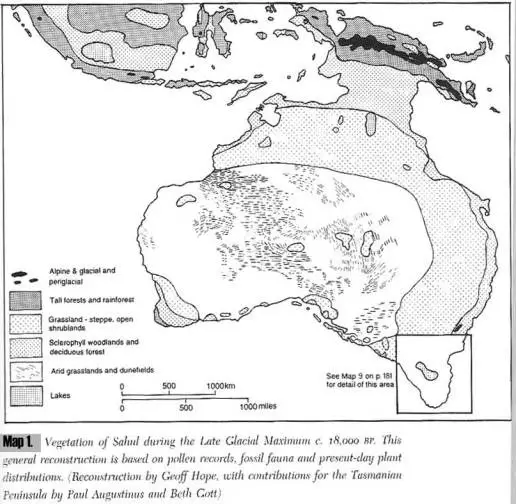
The Australian mainland, New Guinea, Tasmania and many smaller islands comprised a single land mass. This continent is now referred to sometimes as Sahul.
Between Sahul and Sundaland – a peninsula of South East Asia that comprised present-day Malaysia and western and northern Indonesia – there remained an archipelago of islands known as Wallacea. The water gaps between these islands, Sahul and Sundaland were considerably narrower and fewer in number.
http://www.global-greenhouse-warming.com/images/SahulLGM.jpg... shows a fairly wide gap between Australasia and Europe. "However, Sahul and Sundaland even at the height of the LGM were separated by at least 80 kilometres (50 miles)." Last thing I read suggested the gap was ~100 miles though this may have been a more recent period.
Thus, a 50 mile gap between Asia and the United states was likely crossed a few times.
I don't think there is any good evidence for Australia being populated before 45,000 years ago. Modern humans hadn't even left Africa 75,000 years ago.
There where early tool across Afro-Eurasia as far back as 1.7 to 2.6 million years. Early human ancestors may have maintained separate populations spreading genetic mutations between them with occasional waves of migration displacing existing populations. Supporting the first idea is the wide range of habitat giving advantages to prior populations who are better able to cope with existing conditions. http://www.nature.com/news/teeth-from-china-reveal-early-hum...
There really does not seem to be much evidence to tell one way or another.
There are several sites that are dated to ~46,000 years which is somewhat suspicious as it's approximately the limit for radiocarbon dating. https://en.wikipedia.org/wiki/History_of_Indigenous_Australi... Lists a lot of dates prior to 46,000 years including as much as 200,000 (which is not generally accepted) but again not a lot of evidence for that.
However, if you accept the first habitation probably did not leave a lot of clear evidence some date prior to 46,000 years seems likely.
That's not true we've seen speciation happening in front of our eyes with some species.
While time is a factor 14,000 is more than enough for humans to speciate, the reason why this hasn't happened to humans is something that is actually a subject of research today.
Humans have a long reproductive cycle, so that's under 1,000 generations. For comparison bacteria can reach 1,000 generations in ideal conditions in less than 1 year.
We've had documented cases of speciation of various types of animals within only a few generations, birds for example tend to do that rather quickly as well as rapidly form ring species.
And this isn't because birds are special but because they tend to migrate, in other cases natural or manmade barriers that split a species into distinct groups have also causes speciation after only a handful of generations.
Besides birds where it's common due to migration patterns "man caused" rapid speciation has also been observed in rodents (squirrels/mice) and various types of fish.
The first description in what you pointed to says "could signify the beginning of a speciation event". It doesn't say the result is a new species.
The second description concerns a pairing between two hybrids which started a new lineage. It uses the term "lineage" instead of saying there is a new species.
> These two examples make it clear that the division between species is not a black-and-white issue. Rather, speciation occurs as many different sorts of traits (physical, behavioral, and genetic) diverge from one another along a continuum. Because of this, biologists sometimes disagree about where to draw the line between incipient species — about when a division has become deep enough to warrant a new species name. Whatever we choose to call them, these two cases clearly illustrate how a lineage can split and begin to make its way down two separate evolutionary paths.
Regarding ring species, https://en.wikipedia.org/wiki/Ring_species says "Currently, there are four known forms of life that appear to match the definition of a ring species". Frankly, I thought there were more. It would suggest that birds don't tend to rapidly form ring species.
> You do not need a 1000 generations to speciate.
Are either of those two cases described in the literature as a new species, or are they given as a subspecies, or variant, or fertile hybrid, or some other term?
Yes they are a species, i think you are working on a different definition of a species than the accepted common one.
Also don't rely on wikipedia for accurate information about many subjects, it's ok but it's far from perfect or being technically correct.
As for the rest of your argument that's semantics and it clearly misses the conclusion of that article:
"While we can't know the fates of these lineages, directly observing such divergences in real time highlights the fact that we don't always need to look into the distant past or far off future to find examples of speciation in action. Evolution is occurring all around us. We just need to learn where and how to look for it."
We have examples of speciation and divergence in real time over a handful of generations, a species at the end is a group which is capable and practices interbreeding amongst its members but does not breed with others.
My definition is: has it been assigned a binomial name? I'll also accept if the process has started.
The PNAS paper for the first event does not give a binomial. It says:
> We treat the endogamous group as an incipient species because it has been reproductively isolated from sympatric G. fortis for three generations and possibly longer.
I was not aware that this was the accepted common definition of a species.
The second also does not give a binomial. It describes a method to "initiate evolution of reproductive isolation among sympatric populations".
Is that enough to say that there is a new species? If so, I was not aware that the threshold for a species definition was so sensitive.
See, that's part of the problem. It's not at all clear what this list aimed to accomplish, which explains the low quality of the result. You want me to recommend a book? Sure. Read Hemingway.
Reminds me of my response when someone on the street with a clipboard says "Can I give you some literature?" I'll sometimes answer "Sure, do you have any Steinbeck?"