"No quibble" is more a mark of ASI than AGI; while both are easily coopted as marketing terms[0], "smarter than all humans" is harder to dispute than "general intelligence" (can do some graduate level work, can't drive well enough to render steering wheels obsolete, is it general?)
I don't think this is the case. It's not clear intelligence is a coherent concept to begin with, let alone a one-dimensional thing you can maximize. What, is it going to write stageplays that puts shakespeare to shame? Find a way to enforce world peace or end greed? I'm not at all convinced we anything more than the simple competency we expect from humans is possible. What would we look for to know it's there?
> What, is it going to write stageplays that puts shakespeare to shame? Find a way to enforce world peace or end greed?
If it did, who would say "nope, still not super-intelligent"?
(I'm sure it's more than "nobody": the least realistic thing to me about my brother's LARP group was that nobody in that universe denied the gods it contained even though they'd immediately smite anyone who did that).
> As for not wanting to force companies to release only "safe-for-children products", I do actually agree
That would be nice, but as every effort to restrict kids from using software which are not safe-for-children keeps getting condemned for being invasive surveilence, and every effort to stop kids getting the hardware instead gets condemned because of how much of society is now built on assumption everyone has a phone…
I'm half-remembering a now-old satire along the same lines has Germans wondering why having Google Street View work in their area also requires internal photos of their apartments.
It's a five horse race between Alphabet, Meta, xAI, OpenAI, and Anthropic.
Alphabet dropped "don't be evil"; Meta's CEO called their own users "dumb fucks" for trusting him and also clearly thinks "super-intelligence" is just a buzzword given how he tries to sell it; xAI's model called itself "Mecha Hitler"; and OpenAI's CEO was temporarily fired by the board for a lack of candor.
It's very easy to be "the good guys" with this competition.
But it doesn't make you the good guy, it makes you the best of a bad bunch. The least bad. Dario gets a boner every time he talks about taking your job.
> This doesn't explain why Germany has so high electricity prices.
It's the main thing which does.
Say you have two energy sources, Alice Electric can deliver at €0.03/kWh but only up to 10% of your demand, while Bob Energy can deliver 200% of your demand but all units will cost €0.5/kWh.
The net result of the electricity auction, as described, is that the consumers pay Alice and Bob €0.5/kWh each, which gives Alice a €0.47/kWh profit margin and therefore lot of money to expand operations if she wants to, but until she can actually supply 100% of demand, it's priced by what Bob charges.
This doesn't explain why energy costs are higher in Germany. You have to replace the words "Alice" and "Bob" with something that is relevant to the topic at hand.
Bob is the marginal generator: the most expensive power plant that still has to run to satisfy demand in a given hour (or whatever the auction period is, I assume it's per hour).
Bob is not one single concrete thing, it's the abstract concept, anthropomorphised.
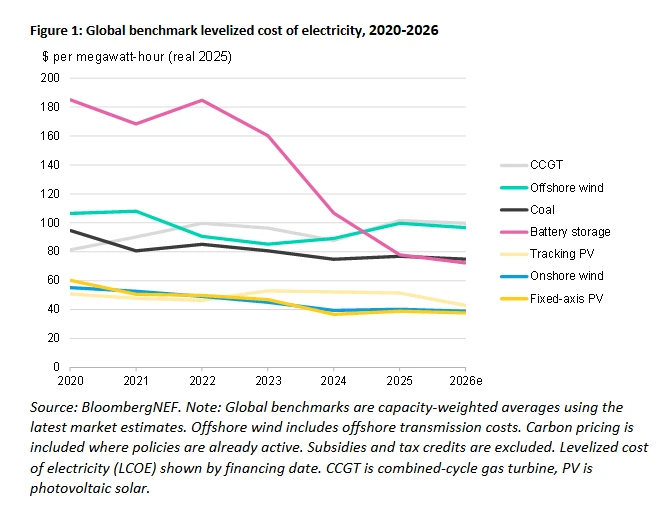
Germany's energy is expensive because the marginal generator is so expensive.
That's nonsense. Solar during overcast days is extremely and at night infinitely expensive by itself. You can't just take some average, you have to take expensive gas or battery backups into account when comparing to a stable energy source like nuclear or coal which doesn't need these backups.
2. Literally everybody knows this. 2006 wants their memes back. Why do people bring this up without realising that demand is lower at night, with shops and factories being closed etc.? Even the duck curve thing is solved with just 1-2 hours of storage.
A quick DDG search says that other nearby countries with higher % of specifically solar (e.g. Luxembourg, Hungary, Netherlands), have lower consumer electricity prices than Germany, ergo solar itself isn't what's causing the high consumer prices in Germany.
And it's not like batteries are even expensive any more, at least not when bought in bulk.
> You can't just take some average,
Sure you can.
Consider a consumer with a constant demand (to make the maths easier, still works if not):
Option 1: use only the thing which works 24/7, but costs €1/kWh
Option 2: use the thing which works 50% of the time and while working costs €0.05/kWh, and the rest of the time go back to option 1.
(PV is of course weirder than that, because it's shaped more like "Over the next 35 years it will emit X joules for your initial investment of Y money", so you're pre-paying for something, and also it's immune to any inflation, and there's a long side-discussion about financing here I'll skip as you seem to be refusing to accept even the fundamentals).
> stable energy source like nuclear or coal which doesn't need these backups.
They absolutely do need backups, their downtime is higher than you may expect.
This is, in fact, why even coal rich countries don't only use coal. Why nuclear-happy France doesn't only use nuclear. Etc.
Dismissing the cost benefits of renewables "because they need some kind of backup" is like dismissing the travel benefits of planes because the airspace around them gets closed every night, or like refusing to use a bike ever because sometimes you need to buy a new fridge and that won't fit on a bike trailer.
Or dismissing oil because of the two stupid wars currently going on, and how much they impact oil.
Bob is gas, here, generally. Gas is the supply of last resort pretty much everywhere. Though in Germany in particular, Alice is beginning to be big enough that the dynamic is beginning to break down; this March spot prices started to go zero or even negative at midday.
> Also, the more panels we already have, the less reliant we are. Energy doesn't stop flowing because deliveries of new panels stop during a conflict. You just pause expansion. A very different scenario to fuel reserves running dry in weeks.
If someone is genuinely worried about China cutting off their power, the fact my very cheap solar inverter came with an app should probably be a consideration here.
I'm not saying the Chinese did put a kill switch into it, but I am saying that we all know what Snowden reported about the US, and given that it really wouldn't be a surprise.
> To scale battery storage to a level that is capable of bridging, say, 48 hours of "Dunkelflaute" (darkness and no wind) on a regional scale (e.g. the entire Scandinavia) is probably unrealistic. Just the amount of lithium needed would be insane. And there were longer Dunkelflautes in recent history.
48 hours in Scandinavia is roughly equivalent to turning all their road vehicles electric. And that's even with Norway using the second highest per-capita rate of electricity in the world let alone Scandinavia (second to Iceland, whose electricity is 100% renewables thanks to abundant geothermal): https://www.statista.com/statistics/383633/worldwide-consump...
Given nobody is suggesting an instantaneous transition, this is not at all unrealistic, and I don't know why anyone might consider it to be.
Good luck with new nuclear, but with all the politics in that domain, I don't expect that to work out even if e.g. Helion Energy supplies working shipping-container-sized aneutronic fusion.
I get the point, but if society cared about globally distributed pollution more than about money, we've have transitioned to renewables and EVs a decade or three earlier.
A lot of bribes have been spent to buy that delay you know, the first global meetings about addressing climate change happened in 1992 and the petrostates have been stalling since then.
Musk has a lot of money for that, too, if he wanted.
Also, well before then, most of the bigger petrostates got together to create OPEC, raised prices enough to cause an economic crisis and stagflation. I don't doubt that big oil companies have bribed and/or SuperPACed and/or lobbied, but fact was, until the mid 2010s (exact year depending on where you live), renewables were more expensive than oil. Now PV and wind are both cheaper. But before renewables were cheaper they were a very hard sell, while "support oil and coal because power is critical" was a very easy sell.
Right now, space data centres are a hard sell even economically, but given most of the land area of the world isn't the USA, I can easily imagine the US not caring (because even what survives re-entry mostly won't end up in the US), while everyone else can care as much as they like but can't do anything about it (unless I'm right about a completely unrelated topic, which is that we're pretty close to ground-to-orbit laser weapons being viable).
> Is wanting low unemployment in our society not rational?
Only conditionally on there being bad consequences for high unemployment.
I don't particularly trust politicians, but there's a whole host of hypothetical scenarios about futures where work is essentially optional. Unfortunately, they're all either in the sci-fi or religion sections of the book store:
Despite people occasionally investigating UBI, the efforts to research UBI seriously have the same problems that Marx had with literal Communism, in that there's an obvious difference between any partial transition as compared to a global transition, and we don't have a completely disconnected parallel world to be a petri dish for us to test the economic outcomes on.


_-_renewable_energy.svg)
[0] e.g. Zuckerberg: https://www.meta.com/superintelligence/
reply