Unfortunately it is from 2022, meaning no OS upgrades.
I think the next mandatory laws EU should pass is that manufacturers should either allow people to upgrade/replace the OS by themselves or provide mandatory upgrades for the next decade (i don't care how the manufacturers handle it, that's up to them, but the easiest way out of such a law is to allow people upgrade/replace the OS by themselves).
The regulation already mandates an OS upgrade period, but the period depends on how long the manufacturer keeps selling the model: software updates must be provided for five years from the day when the manufacturer stops selling the product. From Annex II B, section 1.2:
> (6) Operating system updates:
> (a) from the date of end of placement on the market to at least 5 years after that date, manufacturers, importers or authorised representatives shall, if they provide security updates, corrective updates or functionality updates to an operating system, make such updates available at no cost for all units of a product model with the same operating system;
Why only one decade? I’m still running a 2012 Mac mini. Apple stopped updating Mac OS some time ago, but there are plenty of alternatives that can run on the bare metal. Hardware makers should be required to provide support for the life of the device (defined by customers still using the device), or provide a reasonable way to install 3rd party OS.
At least on Android, when my Samsung Galaxy Note (I loved that phone - replaceable battery, pressure sensitive stylus, IR blaster, OLED, audio jack, water resistant - they went downhill from there IMO) finally end of lifed, I just used the official Samsung tool to upload a community image on it. The process wasn't horrendously difficult. I don't know if people would do it, but it was a clear set of steps that even a tech novice could accomplish if following carefully.
Indeed! The law needs to include firmware in some way. I'm not smart enough to come up with how exactly it should be dealt with, but it does need to be dealt with.
Currently Qualcomm decides when your phone stops getting updates, pretty much regardless to who actually made your phone.
Shoutout to fairphone who actually updated the firmware themselves, surely a loss leading project, but a very respectable dedication to end users.
Shoutout to fairphone who actually updated the firmware themselves, surely a loss leading project, but a very respectable dedication to end users.
I am not sure how much of a shout-out they deserve. For example, Fairphone 4 is still supported until this year. They ship with firmware from 2023 and with a kernel patch release from 2024. Every one of their phones is full of holes because their software lags so much.
Even on their most recent model, they are frequently more than a half year behind firmware updates, ship 1-2 year old kernels, and are late with major Android releases (meaning you miss out on security patches not classified high/critical).
Good examples of software longevity are iPhone, Google Pixel, GrapheneOS, and to a lesser extend Samsung flagships.
Samsung committed to 5 years of OS upgrades on that one, so it’s theoretically getting one more upgrade next year at best. (Or maybe 2, if they release one this year). It’s nearly end of life for a software perspective.
So, they have an XCover 7 now - with similar specs.
Also, they committed to a rather long support cycle for the xcover6 (5 years I think?) - I have one and it is still going strong. I've replaced the battery twice - not because I desperately needed to, but... why not. They are cheap, and I use the older ones still as backup battery packs since they are fast to swap in.
Yeah they are really meant for businesses. Frontline workers, factory floors.
This is what we use them for and they do stand up to the abuse. Of course people treat them very badly as it's not something they paid for. Really long support too.
They're not good in terms of specs for the price but that is not what these phones are about.
Yeah, the specs were... decent... nothing standout. Really I was going over the list of things I had lost after the Galaxy Note got rid of all their features and decided the replaceable battery was the one I cared about the most. The ruggedness was just a nice plus.
Phones should be like PCs - they give you the hardware, and you figure out what to install on it. Unfortunately Linux imo is partially to blame here - if they decided to do a stable driver ABI (don't hate me, this was the norm outside Linux and open source OSes), you could easily separate the OS and drivers and update the m separately.
The missing link here is ACPI, unlike on PC, the hardware doesn't describe what it has to the OS, making the task much harder.
The lack of standardization of handled devices is also another factor, they might look similar or even identical but they often are different per region and have some hardware revisions.
Android does have a separate driver partition nowadays but that doesn't help too much.
Who is "they"? Linux isn't a person or an organization. The people (and organizations) contributing to Linux are all doing it for their own motivations to solve their own problems. You are asking them to make their lives harder, for free, in service of fixing an issue that they don't care about.
Linus Torvalds for one, but generally people in charge of the kernel have a principle of API/ABI compatibility outside the kernel, but no promise for API ABI stability for anything inside, including drivers.
And all of the commenters complaining they would never buy this phone is great proof that the removable battery movement is DOA.
These phones exist. Companies have been producing them intermittently. When they do, few people buy them and there are always complaints that it's too big, too ugly, not fast enough, or something else.
The vocal minority demanding this feature but refusing to buy phones with the feature believe they can have their cake and eat it too. They want phones with all the benefits of built-in batteries and none of the downsides of removable batteries.
What are you basing this on? If you would approach a random person on the street and try to pitch them this idea of bringing back swappable batteries, I think that most people would like the idea. Although this is not a "dataset" per se, I have not talked to a single person IRL that disagreed with this, which includes a mechanical engineer that worked in phone manufacturing
Well, I want a phone that's about one tier below flagship and has certain features. I don't think that's unreasonable.
For comparison: The feature I look for the most is a microsd slot. The last time that option existed that was in the quality range I want, I bought it. For anyone buying a phone right now, samsung has dropped microsd support from multiple more tiers, google and apple have never offered it, motorola and some others have the physical hardware but won't properly update the phone...
That's a feature that has been demonstrated to have no meaningful downsides, and manufacturers won't put it in to good models. I'm not convinced batteries are very different. People's refusal to make huge unnecessary compromises doesn't prove any features are DOA. I can guarantee that the above phone using LCD instead of OLED isn't a compromise for the battery's sake.
The biggest downside of removable batteries is that it's not an option on good phones. There might be some solid physics-based reasons, unlike with microsd, but I'm skeptical.
What you think is reasonable is completely irrelevant. What the marketing, business development, and C-suite groups decide is the best course, will be done.
I can want three cupholders, not two, on my next car, and I want it to be a Toyota EV in purple. Not too much to ask - but Toyota has no reason to make it for me. Not even if 100 of us on Toyota superfan sites want it.
For the record, I want removable batteries and the ability to change my phone's OS. But if there's not sufficient market pressure, it ain't gonna happen - without legal force. And that won't happen if the businesses have too much lobbying power (USA), or it's specifically against government interests (3-letter orgs wanting backdoors).
> What you think is reasonable is completely irrelevant.
Sure!
My point is that the ability to "vote with your wallet" is not really there in many cases, and lack of purchases for some niche and low end phone with a feature is not strong evidence that the feature is unwanted.
> But if there's not sufficient market pressure, it ain't gonna happen - without legal force.
And it takes too much market pressure to make certain changes even when the tradeoffs are minimal, so I welcome the legal force in a lot of cases.
> And all of the commenters complaining they would never buy this phone is great proof that the removable battery movement is DOA.
I had to reflect on that statement for a bit. I've always bought a new phone when there are battery problems or something else. BUT, that's because I can easily afford it.
There are plenty of people in this world who just can't go out and buy a new phone because one part wore out.
Or, to put it differently: I'd really like to replace the battery in my spare phone that I bring into my hot tub.
> There are plenty of people in this world who just can't go out and buy a new phone because one part wore out
Why is this strawman all over this thread? Battery replacement services are well known and honestly affordable. Apple will even do a first-rate job of replacing an iPhone battery for a fraction of the price of a new phone.
This topic is so strange on Hacker News because everyone is either actually unaware of how cheap/easy it is to get battery replacements, or they're feigning that you have to throw away the entire phone to try to make a point.
I don't think you understand just what it's like to be poor. Every penny counts, and something that you can do yourself without specialized tools is a life saver.
I don't think you understand just what it's like to be rich. Every minute counts, and ordering a replacement part that shows up on your doorstep instead of needing to go somewhere to have someone do something (or coordinate a repairman) is a life saver. Likewise, money saved on an easy repair is spent elsewhere.
These aren't strawmans; you're using fancy words to justify your lack of empathy.
I always felt the issue with removable batteries was they had a smaller capacity and would run out of life faster - so the need to be able to replace a battery if you wanted your phone to last more than a few years was important.
Now, with much higher capacity batteries that work better and are more efficient at handling all the demanding displays, high end gpu's and now AI tasks running the background? There's really no need to have removable batteries any more.
Sure, you're going to get a few lemons here and there, but for the most part, batteries these days have no problem lasting the 4-5 years that you need them. You still see three or four year old iphones on ebay with 80-85% battery being sold like hot cakes.
I feel like the fact that the phone-with-removal-battery option already exists and is not popular in the market should be a signal to EU politicians about how much the public actually values this capability.
I don't think the mobile phone market produces variety, somehow its market forces make it strive for uniformity. All phones are basically of the same from factor (with the two foldable ones being niches), roughly the same size, same battery, same connectors, one of two OS, etc.
That's fine, but even among Android users, nobody buys these removable battery phones. It's possible there's a disproportionate reservoir of iPhone&removable battery-only consumers, but it would surprise me if the desire for a reusable battery were strongly correlated with being locked into the Apple ecosystem. If anything, I would expect the propensity to desire removable batteries is more strongly correlated with Android use.
There are a plethora of reasons to prefer one phone to another and while removable battery phones exist if that's a strict criteria for you the market of available devices is extremely limited. Consumers don't have a real choice here.
I would expect that one of the main reasons that people prefer non-removable battery phones are the engineering tradeoffs inherent in making a phone with a removable battery. They will have strictly less choice on this axis when they no longer have the option to buy a non-removal battery phone.
I think you are vastly overvaluing how much consumers actually value phone thinness. The majority of consumers use phone cases (most modern phones have a camera popup specifically to be better compatible with a case to this end) so I think what customers value the most is lighter weight - not smaller form factor. A replaceable battery does come with a slight compromise to weight but stopping the endless chase of thinness has several engineering advantages when it comes to ports and cooling.
I don't think your speculation is completely unreasonable, but I just want to point out that consumer preference as revealed by current, actual reality only provides evidence in favor of my side of the argument. It's totally possible that the manufacturers are completely wrong about consumer preference and they are acting against their own interests by making the batteries non-replaceable, and somehow none of the manufacturers noticed this or were able to successfully take advantage of it to gain market share. But, I think that would be a pretty surprising thing if it turned out to be true.
Usually, in consumer electronics, the unencumbered market tends to gravitate toward what people actually want to buy. Totally possible this could be an exception to the rule, but I doubt it.
Such phones exist, for Android. Several companies* make highly rugged phones. You can drop a Blackview BV7000 down a concrete staircase, watch it drop into the ocean at the bottom, have lunch, come back, and retrieve your phone from 40" of water, likely completely undamaged.
It's an extreme example, and way too bulky for most people, but the point is: "rugged cellphones" absolutely exist.
Better than average phone sold today. The only problem might be lack of android upgrades otherwise it is straight upgrade for most people. This is reason why replaceable battery is important. If you leave IT bubble people happily use ancient phones and do not need upgrades if battery is ok and there is space to save new photos.
The comment is not meant to give you something to buy, it's just proof that it can technically be done, they just don't want to do it for modern flagships.
At what cost though?! And no, I am not talking about money. Any device (and any product really) is a set of tradeoffs.
I like it when different producers select a different subset of priorities for their offer. Competition at work. One of the reasons we witnessed such an awesome evolution in the smartphone market.
I hate it when a bureaucrat dictates a set of demands with absolutely zero regard to the cost or the tradeoffs involved in product decisions and market competition.
> At what cost though?! And no, I am not talking about money. Any device (and any product really) is a set of tradeoffs.
My $200 Moto G3 in 2016 had a removable back cover (admittedly not battery). It was also waterproof (and had a headphone jack.)
The engineering of making things waterproof is in the realm of "A bit more annoying but easily doable if anyone's interested in doing it", not "Doable at the cost of everything else".
> My $200 Moto G3 in 2016 had a removable back cover (admittedly not battery). It was also waterproof (and had a headphone jack.)
It also did diddly squat in the market place and the company producing it ran out of business.
Again, a product is a set of tradeoffs. Those tradeoff include functionality, cost, logistics to build, even marketing and sales. Maximizing a feature to serve a loud minority (headphone jack!) but thus ignoring other features will simply make a product fail in the market place in time...
Not sure what the context or background of that is, but here in India, the G3 sold out shortly after launch.
Per this [1] stat by a Motorola exec too, it did very well.
> Motorola’s General Manager for India, Amit Boni stated at the Moto X Play launch event that the Moto G (3rd Gen) that was launched in July is among the fastest selling smartphones on Flipkart. Its sales mark grossed 140% higher than the Moto G (1st Gen and 2nd Gen).
(And I know that's legitimate because a lot of peers, friends and family, folks on the streets etc had Motorolas.)
> and the company producing it ran out of business.
Unfortunate, yes, but I don't think it was because they made and sold phones that didn't sell. I don't know if it was business mismanagement or what, but it's an unfortunate legacy of one of the most promising brands. Fortunately Lenovo isn't killing the brand, so there's that.
> I hate when a technocrat at a multi-billion dollar company makes those decisions
Really?! So instead of the person hired and paid specifically to select and decide what the product should cost, look and work like, the person whose very pay depends on how well she chooses those product features for you - instead you'd rather have a faceless nameless bureaucrat who never pays the cost of his wrong decisions, who instead gets more power and money the more he panders to the vocal minorities that push populist agendas completely detached from the market place.
> not giving a fuck about any other criteria
That is simply not true, such a company would go out of business fast. As I said before, any product is a set of tradeoffs. Cost (and profit) is just one of the factors. Ignoring the others does not make successful products.
> profit
I love it when a company I buy from is successful. That means it's gonna be around to create more stuff for me to enjoy. It also means the awesome people working there get paid and are successful themselves. Finally, it means that its investors will back up more of this kind of companies that create useful products and services. Profit is great!
>I hate it when a bureaucrat dictates a set of demands with absolutely zero regard to the cost or the tradeoffs involved in product decisions and market competition.
It's because of those "bureaucrats", that car manufacturers were forced to implement catalytic converters and ECUs for emissions controls, and why the air in your city isn't a smog cloud like in the 70s.
I hate it when people assume the environmental and societal problems caused the unregulated free market, are gonna be fixed by the same unregulated free market which only optimizes for profit.
> I like it when different producers select a different subset of priorities for their offer. Competition at work. One of the reasons we witnessed such an awesome evolution in the smartphone market.
>
> I hate it when a bureaucrat dictates a set of demands with absolutely zero regard to the cost or the tradeoffs involved in product decisions and market competition.
I generally agree with that sentiment, except we don't have a vibrant market of many options with many different trade offs. Finding headphone jack, solid reparability, user swappable battery, easily replaceable USB port, and all the other things that one might want is basically impossible. The vast majority of phones are highly unrepairable, have no headphone jack, have everything soldered to a tiny number of internal boards, and are full of anti repair dark patterns.
It is also a rugged phone. So if you want to make a fair comparison with an iPhone, you have to put the iPhone in a case, resulting in a similar weight and thickness.
The distinction, though, is that you get to make that choice as the consumer. You can carry the phone with no case, or you can put a very rugged case on it, or something in between.
Yeah the first thing everyone does with their new iPhones is put them in a case - at that point thinness doesn't matter, Id argue Apple counts on it, as their phones are awkward to hold otherwise.
Replaceable covers used to serve the same purpose.
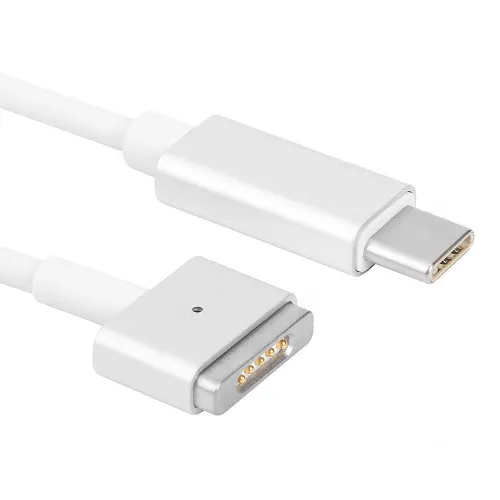
Indeed. I've had my XCover 6 for 3½ years now. I've dropped it many times, on hard surfaces (like outdoor concrete/brick). I've undoubtedly been fortunate. the plastic has gouges in it. there's (small) scratches on the screen (some from my keys), but the screen is not cracked. When it is dropped the back and battery pop off, which I think helps dissipate the forces. BTW, for anyone trying to extend their phone life, I strongly recommend those magnetic USB connectors. Reduces wear and tear on the USB port, and is also kinda convenient for quick disconnect.
> I strongly recommend those magnetic USB connectors
Note that these connectors are in violation of USB standard and potentially harmful as they expose the pins in an unintended way. For instance, notice that all the connection on the USB port are not all the same length, it is a form of protection, to make sure the power lines are well connected before the data lines make contact. With magnetic USB connectors, you lose that feature, in addition to potential issues with ESD, short circuits, etc...
I have a friend who swears by them and never had a problem, but still, that's good to know.
> notice that all the connection on the USB port are not all the same length, it is a form of protection
This was noticeable on USB-A connectors when you look closely where the two outside pins were slightly longer than the two inside pins: the Make-First, Break-Last (MFBL) principle. You can also see the same thing on SATA edge connector pins.
Take care googling for photos because many are CAD mockups misinform (because they are drawn pretty incorrectly and show no physical length differences).
USB-C does have longer pins for the ground, and the CC (configuration channel) connects last. A USB-C host doesn't deliver power until it is negotiated using the CC pins.
So USB-C via a "magsafe" connector is safe.
But maybe look for the two outermost pins to be longer.
You mention ESD which could be riskier since charged fingers or worse could touch contacts directly. However the lip around the contacts is usually grounded so any spark should be grounded first. I would also assume modern electronics are well protected against ESD (nobody wants occasional undiagnosable failures leading to refunds). Sure that stuff from earlier this century wasn't so well protected. YMMV if you are a sparky person in a sparky environs: weigh the downside costs of different approaches appropriately.
At least the USB-C ones I purchase are not flush - I never found those to be reliable. It's a male prong that looks pretty much identical in wiring to the male prong on the phone, that connects to a female one plugged into the socket. That plus a bit of a collar to help hold it in place. So I don't see why there would be any difference in grounding, it's the same connection...
(that plus the comments from the more knowledgeable person below)
Eventually they start wearing out, and I just replace them. I've had no issues with high voltages (45W+ charging on phone and steamdeck) and with peripherals (hub for example).
You want to get everything grounded before the data wires connect. But that's more about the shroud than the pins as far as I understand it, and a magnetic connector could ensure grounding if it was designed to do so. And for charging purposes you could skip the data wires entirely.
Oh yeah so it's utter trash and not worthy of our attention. Imagine carrying a whole 58 grams more, during a whole day, impossible for the average tech worker's atrophied muscles
The point is that people have different preferences, so the EU should not force people to buy phones with removable batteries. People who want such features can buy those phones, and people who want smaller, thinner phones can buy ones with integrated batteries.
At most the EU should tax externalities like electronic waste, though that would be a rounding error compared to the cost of the phone itself.
Phones with removable batteries are rare because only a small fraction of people want phones with removable batteries. Phone manufacturers also dislike removable batteries because customers buy cheap 3rd party batteries and complain when these batteries perform poorly or malfunction, sometimes by exploding. And then the headline is, “Phone made by company X explodes.” not, “Cheap battery explodes.” Removable batteries also introduce new failure modes like contacts degrading, causing phones to power off unexpectedly when jostled or flexed in certain ways. That increases the risk of a recall and bad PR.
I and millions of others want a phone that is smaller than the current offerings. Heck, my 13 mini is too big for my tastes. But I don’t think that means the government should force phone manufacturers to make smaller phones. So too for features like removable batteries, physical keyboards, or headphone jacks.
What do you mean by "rare"? You just click "order". It's not like you have to go on the quest for the lost arc or anything like that. They are uncommon in the sense that people don't actually get them, but that's not because of a lack of availability. People do not want them.
They mean the models are rare, not the devices. The claim is if you want feature X + removable battery, it's unlikely that you will find it. People's willingness to forgo the battery for feature X therefore doesn't tell you if people care about removable batteries in an absolute sense, just that they care relatively less than they do about feature X.
You could argue that the market already reflects people's desires via, eg., Apple's market research. They could argue that democracy in the EU also reflects people's desires.
> The point is that people have different preferences, so the EU should not force people to buy phones with removable batteries.
There are many food additives with very useful properties, but health effects. There are many perfumes too where the original formulation had a particular compound layer found to be carcinogenic.
Regardless of whether an individual prefers to use such compounds at their own risk or not, large companies will use whatever is the cheapest ingredient for their product.
In some cases, that's better for the consumer - who, often, has almost zero choice.
(And if you think you truly have choice as a consumer, I challenge you to use a phone that isn't running either Apple or Google's code.)
I not sure how much we’re disagreeing here. Applying my argument of taxing externalities to certain food additives would result in taxes so high that it would effectively be a ban.
The externalities of integrated batteries are that people probably replace their phones sooner than otherwise, resulting in more electronic waste. But phones are only a tiny fraction of e-waste. Most e-waste is from household appliances, displays, & HVAC equipment. Phones are less 10%. I mean, how could it be otherwise? Phones are small and people use them for years before upgrading.
I’m not sure what the Android/iOS duopoly has to do with removable batteries. Mandating removable batteries would not change the operating systems available. And while there isn’t much choice in which OS you can run on a phone, there is enough choice that you can buy phones with removable batteries. If anything, this is an argument against mandating removable batteries, as governments are not mandating/subsidizing another phone OS despite far less choice in that area.
Lastly, I don’t see how banning people from having phones with integrated batteries gives them more choice. Most people (such as myself) don’t really care about removable batteries, and would rather have a phone that is smaller, cheaper, and/or more resistant to the elements. The way to give people the most choice is to tax externalities commensurate to the harm they cause, and let the market figure out what people actually value.
My point or argument isn't that customers have absolutely zero choice, but that there are very few options out there.
If (phone) OSes were truly healthy free markets, there would be a lot of healthy competition. Even cars and automobiles (which still are almost oligopolies, as it's extremely hard to compete) have more options.
I said that sentence primarily as counter to anyone who thinks the mythical "free market" is a panacea to all ills, as many anti-EU folks often have such a view. I was trying to demonstrate that an unregulated market is (very) often unhealthy, and can paradoxically can result in viewer choices.
Sure, but it seems like the person I was replying to doesn't even consider two options to be a choice, so perhaps their choice framework has obscure criteria that you or I haven't been able to grok. That's why I asked.
That assumes that the market itself is actually "free" and consistent and that there are no bad actors in the mix, and upstarts are allowed to freely start and compete. Given the regulations in the space that is emphatically not so.
Incumbents will remove and enshitify a number of features in order to maximize returns... Your new clothes dryer has a 10 year mechanical warranty.. but the control board isn't covered, will die in 12-24 months and won't be produced again. Oh and there's some clunky DRM in the mix on top. Guess you get to buy a new dryer, but this time you'll go with $OtherShittyBrandThatDoesTheSameThing.
Aren’t newer washers/dryers full of electronics because of laws mandating higher efficiency? My parents have an old Maytag washer that uses around 30 gallons per load while my washer uses less than 8. I know Speed Queen makes dumb laundry machines, but at least one of their models was banned for residential sale by the Department of Energy. They ended up figuring out a workaround by gimping the default cleaning mode and encouraging users to not use that mode.[1]
But I don’t see how mandating removable batteries helps this situation with phones. I don’t replace my phone when the battery degrades, as it’s pretty cheap & painless to replace the battery after a few years. I upgrade when my phone stops getting security updates, or when a new phone comes along with some feature I want.
I'm mostly with you.. my hope is to see more options with swapable batteries... I used to keep one on the charger and the other in my phone, then just swap them out when I leave the house. Not any time recently, but up until android/ios became pretty common.
This has been repeated so so many times... How can you be sure that throwaway glued-together phones are thinner and lighter than repairable phones.. If there is any source of this information, it's vendors who have interest in phones being non-repairable so they can ship more units...
How about vendors get on their asses and design thinner and lighter phones that are not e-waste from the moment they leave the factory?
I bet you when forced to make the right decision they can go even thinner and lighter than the current flagships...
For that matter, I put a chonky case on my phone anyway... would rather have a sturdier phone that doesn't need an additional case that has the features I'd like, including an easily replaced/swapped battery.
Beyond this, hell, make the "internal" battery solid-state with minimal capacity and have an external power pack from the get-go as part of case designs. Get the size of battery you want... if you want a big booty phone with battery for days, you can get it.
E-waste is a minuscule rounding error compared to all the other forms of environmental destruction modern industrial civilization causes. European countries are massive polluters and net carbon producers (though not quite as bad as the US); e-waste shouldn't even be on their radar since it is a distraction from almost infinitely more important environmental concerns. People complaining about this don't actually care about e-waste, they just talk about it because it's convenient for their argument.
Earth's resources are finite, both in terms of raw materials and ability to absorb pollution. Stewardship of our resources entails the regulation of the things we create with those resources such that our collective consumption is conserved. Such oversight is both prudent, and as history and global outcomes teach, quite necessary.
I don't disagree with your statement, but an increase in design durability also does those things. A phone that you can drop and it doesn't break creates less pollution than a phone that you can drop and replace the screen.
It really depends on the model, manufacturer, & luck. I’ve never had a phone lose its water resistance. The phone I use today (a 13 mini) is almost five years old and I clean it by running it under the faucet.
I'd return it if a brand new device that advertised IP67 died almost immediately under a normal sink water flow. Clearly it wasn't built to spec and one can't trust the rest of their manufacturing.
But I mean that's just similarly true of Samsung products. I avoid them like the plague. I haven't had a good Samsung device in almost 20 years, and used to be a Samsung fan
They said 2 years after purchase. So that's where the debate is. How long should we hold manufacturers accountable for in regards to waterproofing? 1 year, 2 years, forever?
I had a Pixel 6a last year bought not too long after it came out. I left it on a patio table. I was hosing things off and there was a significant amount of over spray on to the table. The screen died over the course of a couple of hours due to water ingreess.
I definitely don't mean to call into question Pixel device robustness overall into question. I'm just trying to point out even well glued phones eventually develop weaknesses to their seams. And this was a device I routinely washed iin the sink to clean, it really caught me off guard when it failed.
I'm kinda surprised with esim, wireless charging and Bluetooth noones just made a phone with a solid layer of glass completely surrounding it for 100% waterproofing
A lack of physical port makes troubleshooting more difficult. Apple didn’t remove the diagnostic port from their watches until the series 7. Also I think certain governments require that phones have a USB-C port.
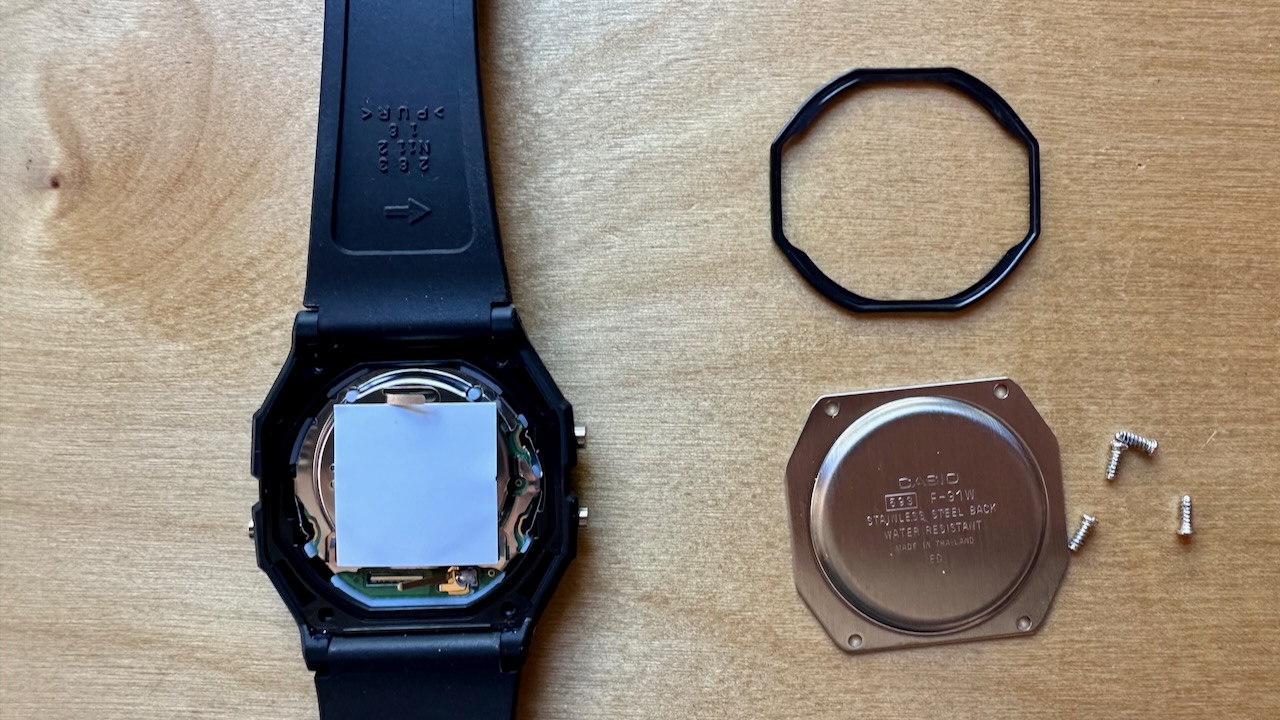
My low-cost plastic Casio watch based on a very old design is waterproof and battery can be swapped out by undoing 4 philips screws, no glue. Its buttons can also be operated under water while staying waterproof.
I normally much prefer screws over glue but Apple has at least been using repair-friendly glue like the electrically debonding adhesive in use for iPhone 16e/17e.
Making these devices repairable is not just about taking it apart, it's also about getting it back together. If I need to electrically debond the adhesive, then I'd also need to new strips of this special adhesive to hold the new battery in place. All of this is after needing a heat gun to weaken the adhesive just to get into it, which I assume also needs to be reapplied on reassembly to retain the same level of water and dust resistance.
It's not just a matter of buying a battery and using some tools the average person has on hand. A whole kit of specialty tools and parts needs to be ordered to facilitate the repair. Apple's own repair kit is the most extreme form of this, where they ship 70lbs of tools, which would be comical if it wasn't so sad.
Yes. Dont assume that everybody is technically minded such as yourself.
I know plenty of people that would never even consider jump starting thei car. However are also quite happy with poppping open a battery cover and doing a simple swap like any other battery powered device.
You don't have to be "technically minded" to figure this out. It's not spinning up a Kubernetes cluster, it's a picture with an arrow that says "Clip red wire here". Simply driving a car is a thousand times more complicated, and we expect most everybody to be capable of that.
There's also a difference between not wanting to do something, and not being capable of it.
It's ridiculous to baby proof the world to that level. For a significant portion of that group, taking a screwdriver to their phone is also beyond comfort — those people can take their phone to a mall kiosk just like they do now.
It is probably a good idea to review some instructions before jump starting a car because even though it is simple, if you do it wrong (connect the battery terminal last) you can blow up your battery from the ignition of hydrogen gas.
Well yeah any glue is worse than screws: this I agree with you. But attaching a 9V battery to the glue is about the same difficulty as aligning the screwdriver with the screw and applying torque with a screwdriver.
There's little metal tabs you can alligator-clip a 9-volt battery onto, which will release the adhesive. Way better than the stupid pull tabs you had to pull and roll in a very particular way in order to not tear them and render the battery unsafe to remove.
At first it looks like a normal torx head, but then you realize it has 5 lobes instead of 6. Apple used these on early iPhone models when you actually could open them with this proprietary screwdriver.
I get it for watches, but I've never understood the mass-market need for a waterproof phone, outside of a few niche hobbies. Are people showering and swimming with their phones or something? Or dropping them in their toilets? The wettest my phone has ever been in 8 years is in my pocket while it's raining.
People in humid climates and cold climates were regularly having their phones get denied warranty service because the water ingress stickers turned red due to condensation, without ever exposing their phone to water immersion. This was understandably upsetting for a lot of people who just wanted their phone to be fixed under warranty.
Thus, companies put in a big effort to seal their phones against dust and water, which ought to have dramatically reduced these service issues and led to a better customer experience overall!
There is waterproof specification levels. I haven't met one consumer product which doesn't let moisture in. I live in a hot country (not over 40ºC mind you)
If I not being precise, keeping your phone in your jeans deep tight pocket when you are sweating or raining will cause you problems. It might seem too many coincidences for you, but it is common enough that some of us avoid keeping the phone in the pocket.
In a cold climate it’s the opposite problem. You need to keep the phone warm when you’re outside, otherwise it becomes extremely cold, and then becomes a condensation magnet when you come back inside!
It is not that long ago that smartphones would die from moisture exposure if you left them in the bathroom while taking a shower. I had a girlfriend around 2001 who spent all her savings on a shiny new Nokia 8250, got drunk and barfed on her jacket. The phone was in the pocket, and the moisture from the wet jacket completely killed it, she cried about it for weeks. I also remember my mother dropping her iPhone 6 in the harbor while getting off a boat, it got picked up but was dead. Last year I was out hiking in the rain, and my aging (5+ years old) iPhone 11 got water inside it and started dying soon after (I'd been sailing/swimming with the phone and had exposed it to salt water, apparently that will wear down the seals if you do it enough.)
In other words, I absolutely see the need for waterproof phones, even for ordinary people doing ordinary things, and am never going to buy one that isn't.
I like to wash my phone under the tap, not getting paranoid of having it in a table close to the pool while drinking a few beers with my wife and friends, it is a really nice to have feature if you live in a warmer climate.
Kayaking, fishing, river floating, surfing, diving, snorkeling, etc. "No one I know takes their phone snorkeling" <- that's because they're not presently waterproof, but I imagine a lot of people would like to take a high quality camera under water.
Tens of millions of people have outdoor hobbies that puts them in direct or incidental contact with water. Hundreds of millions live in places where rain happens. Billions live in situations where a spill of drinking water (or water based liquids) are a real risk for thier phones.
I don't want to take extra care and caution just to have a life and a fone. Theoretically this thing makes my life easier and I want it to act like it damnit.
I think it's mostly marketing. When all phones are identical glass rectangles, the only meaningful way to distinguish your product is by being the biggest, thinnest, highest IP-rating.
Most of these metrics are entirely orthogonal to what any real person wants from a phone, but that's an irrelevant detail to marketing types
I actually never did. I think you're only supposed to replace it on those scuba-style watches with screw-on casebacks that shred the gasket when fully tightened to ensure a tight seal.
But on those watches with 4 screws on the case, the gasket seemed fine to me to keep reusing.
I think a lot of sealing rings / gaskets are meant to be single use. I had to swap the heater on my hot tub a while back and the store told me to change the o-rings on the inlet and outlet as it was unlikely the prior ones would re-seal after being loosened.
It seems like the same can be true for the glue used on the iPhone.
> Splash, water, and dust resistance are not permanent conditions and resistance might decrease as a result of normal wear. Liquid damage is not covered under warranty, but you might have rights under consumer law.[0]
If a gasket has a predictable life, there could be a warning after that period that the water resistance may be compromised and to replace the gasket if this is a concern for how the user use's the phone. With glue, it seems less certain and Apple goes so far as to say even dropping your phone can compromise the seal enough to risk liquid damage.
Meanwhile, a G-Shock was designed to have a battery life of 10 years, have a water resistance of 10 bar, and survive a fall of 10 meters. Dropping the watch doesn't nullify the water resistance claims, the goal was to be able to do all of those things at once.
I have had blackview "rugged" phones before - the only reason I had to give up on them was that they never update the OS and I couldn't get Lineage OS on them.
These things _do_not_break_. Once I rashly dropped mine on a concrete floor to show off to a friend. I regretted it immediately, thinking oh no, I didn't have to take it that far... it turned out it was completely fine. I washed it with soap when I got mud over it. It also weighed a ton in my pocket.
Timex has been making iron-man watches held together with Philips-head screws that can withstand 100 meters of water pressure since the mid-1980s. Waterproofing is no excuse for this nonsense.
Watch cases are relatively huge for what needs to be inside them. You can see the difference between an entire smartphone and a simple time keeping device, right?
They also don’t have the long aspect ratio of phones (bending moment).
This doesn’t compare to phones at all. It’s like trying to compare your TI-83 calculator to a MacBook Pro
Now go look up why they stopped riveting ships in the 40's and went to welding, there are no modern riveted ships. Even with the rivets they were forged not pressed, nothing like a screw.
Cheap aluminum boats are still riveted, welding preferred for obvious reasons. I have an old riveted aluminum John boat and is leaks through the rivets and seams...
I think you may need to think out your entire post before typing such contradictions.
Riveted hulls worked for hundreds of years and well maintained they can last forever. Just bacause welding makes it cheaper to maintain in the long run does not detract from the fact that riveted hulls are very performant, which is why they were used everywhere that needed not only waterproofing but pressure containment too.
I once had a cheap Timex watch die from water ingress after running a track workout during a torrential downpour. At the time I joked that it only failed because we ran farther than the 100m rating
I think the USB & speaker are the weak links for water ingress. Also, a removable battery would (probably?) significantly weaken the phone. So, if you dropped it, it'd be more likely to sustain real damage.
I don't see them as very big weak points. USB doesn't have enough voltage to do jack in water even if you don't detect the water and turn it off. And the speaker can be made entirely out of waterproof materials, there are literally waterproof floating pool speakers you can buy for dirt cheap. The weak link is the main oring/glue as always.
In Spain, a similar length high speed train route would be Madrid-Barcelona, that's 400miles and takes 2h 30min.
If you offer me the same price for flying than for taking the high speed train, I'll take the train every time.
In practice it'll take less travel time, no security lines or theater (no problem bringing your water bottle or whatever), you can bring more luggage, you can stand up/walk/visit the bar during the trip, you go from city center to city center so you don't have to spend an extra in taxis... I just arrive there 20-30 minutes before the train leaves and that's all.
Oh I don't know — I travel the Boston-DC route a lot and fly only because it's significantly cheaper than taking the train. If prices were comparable I would take the train even without it being "high speed", I think there's a market for high speed rail if the prices were as low as flights!
diablo canyon has 2 reactors that can make 1.1MW per hour continuously. about 2.2MW/hr they both aren’t always on but that’s the goal. It’s closer to 2MW/hr actual
the largest solar plant in california is Ivanpah. It made 85GW/year. Thats 97MW/hr.
It would take 20 clones of Ivanpah to match one diablo canyon. Ivanpah took 4 years to build, cost 2.5B and was in discussions to close because it’s not cost effective.
mount signal, the largest PV plant in california makes 1,200GW/hrs per year. it would still take ~15 copies of mount signal for a single diablo canyon https://en.wikipedia.org/wiki/Mount_Signal_Solar
my whole point is solar is great, but the insane scale it requires to get reasonable output is really underestimated. you would need solar fields 100sqmi big. probably many of them. solar alone won’t be the future of humanities energy needs because it’s not efficient enough. we should still keep building solar. but if we aren’t building nuclear too its not enough growth
The other day I calculated what it would take to run my entire country on pure solar, assuming magical infinite storage capacity. Even here in Central Europe, the required area for all the panels was a pretty insignificant number that, even if built as a single huge circle, would easily fit in many different places.
Did you ever calculate the cost for a hypothetical battery that could keep solar power available whenever the sun does not shine? This is where nuclear, well, shines
100 square miles isn't big, the US is 3.5 million square miles. It's also the size of a nuclear plants emergency planning zone, so sizes are comparable.
> diablo canyon has 2 reactors that can make 1.1MW per hour continuously
MW/hr is a nonsense unit for generation capacity. The 2 reactors at Diablo Canyon each generate around 1.1GW of electricity (not MW, and not “per hour”, watts are already energy/time.)
> the largest solar plant in california is Ivanpah. It made 85GW/year. Thats 97MW/hr.
Ivanpah is a badly designed plant that isn't representative of CA’s solar generation (which is largely distributed, not large utility-scale plants) and is being shut down, but also these numbers are both nonsense units and unrelated to the actual stats.
Ivanpah’s peak output capacity is 397MW, it was intended to produce around 1TW-h per year, and it has actually produced an average of 732GW-h per year (equivalent to an average output of around 84MW).
There is so much misinformation in here, so densely packed.
Ivanpah is is not the largest solar power plant in California. It's an experimental solar-thermal plant. Talking about megawatts per year is not a meaningful term (megawatt-years would be). Ivanpah despite its much talked about failures delivers between 350 and 850GWh per year.
The largest solar plant in California is Edwards Sandborn, producing somewhere around 2500GWh per year (it's newer so numbers are less published).
Diablo Canyon produces around 18000GWh/year, which is huge.
But with all costs combined, Diablo's price per MWh is close to ONE HUNDRED AND TWENTY DOLLARS off of a massive initial capex. Modern solar battery installs trend towards $30-60 for the same output.
So I'm sure your tour guide had some neat numbers but you should be careful not to repeat them verbatim (or unremembered).
Diablo Canyon can output 2.2 GW, if you assume 50% (1.1 GW) for the sustained output, I come up with 9636 GWh per year, or ~19,200 GWh per year if it was able to run at 100%
It doesn't. Watts were a mistake by whatever committee it was that standardized unit names. Power should not have been given a unit; it should have been left as ∆energy/time just as velocity is distance/time.
Joule is a derived unit, it is kg*m^2/s^2. There are lots of derived units, like hertz and newton, because they useful than writing out the whole thing. Electronics would be really annoying if had to write out volt, ohm, and watts (ampere is base unit, coulomb is derived).
Don’t put words in my mouth. I only said that power should be J/s instead of watts. The “per second” part of that is what is most important thing about power. It’s the rate at which energy is accumulating or being used up.
I regard that as a downstream effect of giving power a unit in the first place, but yes. We should have just stuck to J and J/s. It would have prevented the kWh and also abominations like the mAh “capacity” ratings you see on batteries.
Using watts is fine for anyone who deals with energy and power all the time. The problem comes when the lay person tries to reason about power. If power were written as J/s then they could use the same reasoning that they are already familiar with from dealing with speed and position, or with flow rate and volume.
Pretty much mirrors my experience using GPT to generate images creatively. I tried to generate an image to accompany a Robert frost poem and it made something... plausibly related. But not what I was describing. I spent the next 90% of the time making it 10% closer to what I wanted but it never got all the way there.
I’ve given it different levels of open-endednes, give this flow chart an aesthetic like this mechanical keyboard, or generate an SVG of this graphic from a 70s slide show, but it never looks quite like what I have in mind.
In the end, I think you only use this stuff to generate images if you’re prepared to accept whatever comes out on approximately the first try.
This isn't a solvable problem without world models. Tokenised prompting is like stabbing a pin at a huge target in the dark. Sometimes something interesting falls out, but latent space doesn't have the definition to give most people exactly what they want.
When it does, it's more likely to be something popular and unoriginal, where the data is dense, and less likely to be something inventive and strange.
> This isn't a solvable problem without world models.
I wish we could use something like a simple DSL rather than English prose to work with these models, in order to have some real precision to describe what we want.
Nothing stops that from happening. Just needs to be trained in that DSL. Though at that point it returns to it's original form as a better autocomplete/IntelliSense :).
That will likely happen in the specialized fields. We can already see tools like Figma, Mira, and others that generate functional-ish frontend components in full typescript and corresponding styles (that are also selectable and configurable in the interface). Though, not quite as free, since they do load their base framework and components to ensure consistency and sanity / error-checking, etc., but even then it is in fact generating you useable, modifiable components that you can engage with in precision in your normal DSL.
For video, this likely exists, or is being worked on as we speak. All specialized domain tools will go towards this model to allow those domain experts to use the tools with the precision they expect AND the agentic gains we already take for granted.
My experience with AI image generation is similar, although with a higher success rate (depending on how accurate you want the result to be); but indeed, filtering is a major part of the process.
In my experience, Sora was fantastic for what it did. Light years better than Adobe Firefly. On par with Leonardo.
A lot of YouTube content is really talk, so it was easy to create Sora videos as video content while you talked over them.
However, its failure was that it watermarked everything. WTF? Leonardo didn't do that. Neither did other models. So while video gen was excellent, you always had these ridiculous floating watermarks.
there’s a huge component to gamers that they are emotional and resistant to change. gamers hated steam when it came out. and now the backlash against epic store is huge. they haven’t done a good job fixing the perception of epic store the way steam did
I certainly still hold a grudge against tim sweeney for saying piracy made them not release stuff on pc and after a while going back to releasing on pc while whining about valve fees and then launching epic games with similar fees and way worse service for the developers...
As I understand it, epic charges less but also offers less services that a developer can need like the gamehub and steam's 30% i think is tiered and reduces with sales volume? I'm not sure, though, don't take my word for it.
1. Those features aren't a la carte, so the share matters if you're not utilizing those extra services. You're basically paying for the audience.
2. Valve does have tiered shares, but it's based on publisher sales. And it's extremely high. I have to check again, but I believe the threshold was 25m yearly revenue for 25% and 50m for 20%.
Innsome ways it's more frustrating. It's basically a tax cut for the rich.
If you are a large game, they will not provide you an appreciable portion of your sales as keys. Sales made this way also likely hurt your organic distribution.
Re: value propositions: Steam's 30% reduces to 25% after $10M made, and 20% after $50M.
> there’s a huge component to gamers that they are emotional and resistant to change.
This is just wrong. You portray people as being irrational / "emotional", but Steam was actively bad when it first launched. The fact that people changed their opinions on it when it later became actually good is not emotional, that's in fact exactly rational.
The Epic Game Store doesn't need to fix "perception", they need to fix their actual product instead of trying to take shortcuts to gaining users by burning hundreds of millions of dollars per year on exclusivity deals, which are extremely anti-consumer, and will obviously result in rational backlash against somebody blowing money to attempt to force people to use their product for access to a completely unrelated product.
Exactly. Steam an launch was some other program you had to have running on your machine, that was buggy, taking up resources when most people were barely running most games (people upgraded computers to play Half Life 2!), and had no point.
Steam with thousands of games, that regularly has (or had) massively deep sales that let you get games for cheap, barely uses resources (most players are not struggling now to run games), and run very smooth. Is a very different beat. Valve earned trust.
Without commenting on any other part of this exciting console war, I don't know if this is true. Steam on my machine still always consumes nonzero CPU when minimized, possibly because it opens to the busy animation/video-filled front page then its WebView doesn't detect minimization. It's funny how Steam never comes up in the "stop making WebView/Electron apps" discussion when they were the original sinner (yes I know they were using IE originally).
You are correct. Steam was actively bad at launch when it only had Valve games on it. And they fixed the platform and then started allowing other devs to put their games on it.
EGS is currently bad and trying to position themselves as a Steam alternative when they simply are not even close to the same quality.
this kind of deal timeline management happens at all companies. this is why contracts get structured in complicated pricing structures to make it easier for revenue recognition to occur in the quarter it’s supposed to. the timeline can move from 3 months to 6 it’s still going to be a huge focus area for a lot of
people at every company
This is why Netflix broke up the final season of Stranger Things in such a weird way... they wanted new episodes at the end of quarters, to have good subscriber numbers for the quarter report
no one wants to believe this but there will be a point soon when an ai code review meets your compliance requirements to go to production. is that 2026? no. but it will come


reply