The "best" fake news these days is the stuff that doesn't register even to people are read-in on the usual anti-patterns.
Subtle framing, selective quotation, anonymous sources, "repeat the lie" techniques, and so on, are the ones that I see happening today that are hard to immunize yourself from. Ironically, the people who fall for these are more likely to self-identify as being aware and clued in on how to avoid fake news.
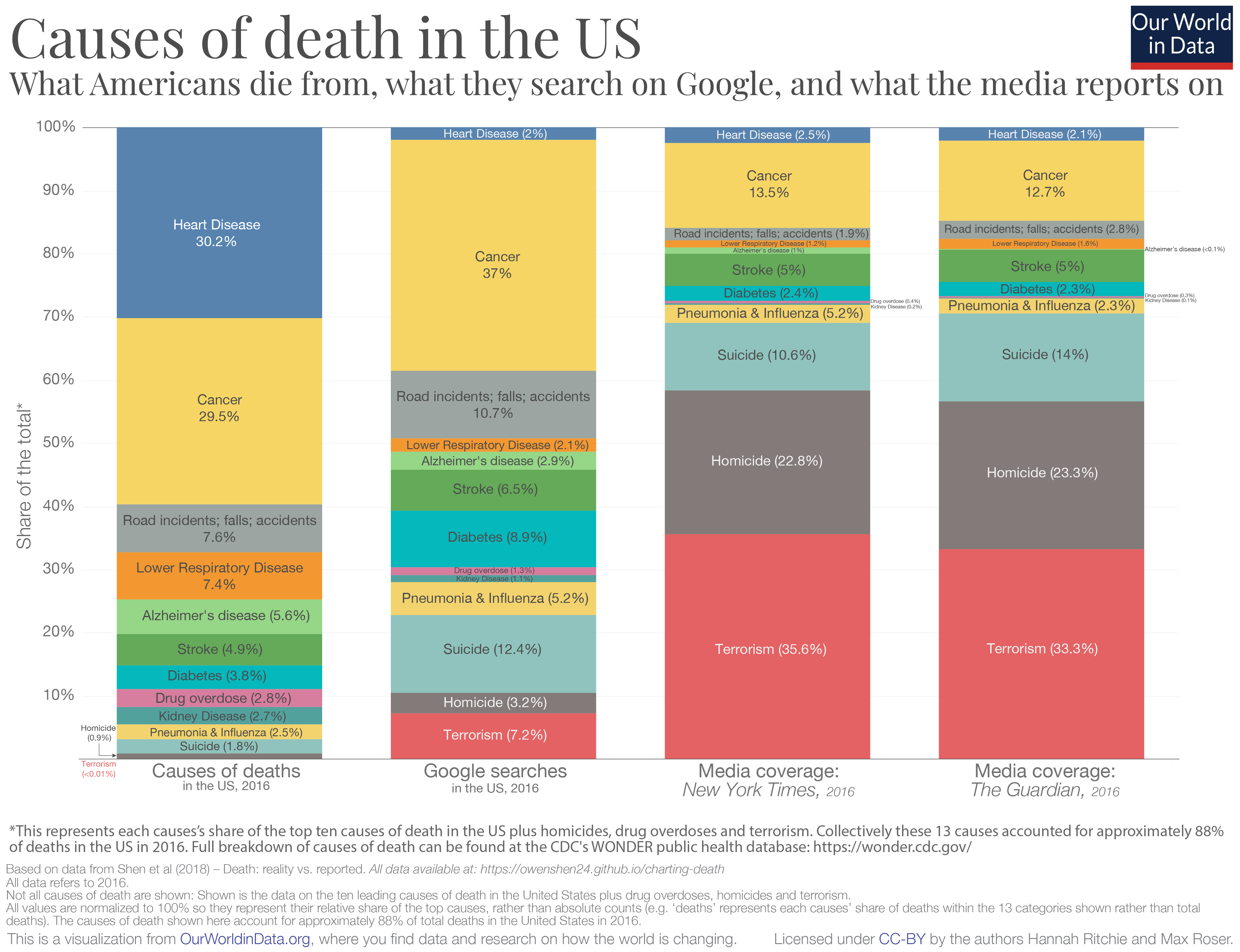
Second best. The best is selective reporting. Even if every story is reported 100% accurately and objectively, by choosing which stories are promoted, and which buried, you can set any agenda you want.
This to me is the most important thing, and has been for decades. When people complain about liberal bias in the news, they’re looking at the small picture - how a particular story was written. They don’t see that what stories are told in the first place get decided by people with a lot of power and money. Instead of focusing on “How should we handle immigration in the US?”, the first question is, “Why are we talking about immigration in the US instead of something else?”
This is the sort of thing The Last Psychiatrist used to rant a lot about. Taking a step back from the content of the message lets you think about the framing and underlying structure being implied by the fact that the message exists at all.
The best comment that I heard about media bias was from a conversation I had with a major news anchor nearly 20 years ago. Off the record she says, "We are biased both ways. Most reporters are liberal, and most owners of the media are right-wing. So most stories slant left, but on the big ones we're forced to slant right.*
This was before Fox News became so powerful, and media became more explicitly ideologically divided. I sometimes wonder how much it has changed since.
But given how any left-wining news outlets Rupert Murdoch owns, probably there remains a lot of truth to the observation.
Depending on which issues matter to you, there are a lot more than 4 dimensions.
I'm a fun example. Of the major candidates in the last election, preference list read (best to worst) Ted Cruz, Bernie Sanders, (big gap) John Kasich, Donald Trump, Marco Rubio and Hillary Clinton. This does not fit with ANYONE's idea of the political spectrum.
Why that order, and how do the most oppositely polarized candidates wind up on top? My top issue is NSA surveillance. Ted Cruz opposed NSA surveillance and has publicly voted and taken a stand on it. Sanders has questioned it and been luke-warm against it. Kaisich at least made some comforting noises about controls. The only good thing to hope for about Trump is that he will be incompetent. The remaining two are strongly pro-NSA and bureaucratically competent enough that they would have been able to push the NSA agenda forward.
That said, people like me are weird. As survey data shows, the parties are polarizing along the traditional left/right divide. See https://www.people-press.org/2014/06/12/political-polarizati... for data showing that now over 90% of Democrats/Republicans are farther left/right than the average Republican/Democrat. While back in the mid-90s, there was a much, much larger overlap of views.
It seems like even personally identifying as conservative or liberal is a fairly new (last 30 years) change. Time was it meant "stay the course" vs "shake things up", which are reasonable things the change your mind about from election to election, or federal vs state elections. Now the parties are just sports teams, and you support your side as a matter of personal pride.
Look at Reagan's last election - he was hugely popular, and won by a massive margin in the electoral and popular votes. A big chunk of the country was happy voting for a democrat before Reagan, and went back to voting for one after him. I can't imagine a scenario like that these days.
In the US we have only two political parties that are able to regularly elect people to national offices. So yes, its pretty one-dimensional politicking here.
To be fair we were told the immigration crisis was fake by the media until Trump story rating dips and immigration story rating spiked. Basically after the Muller report turned up nothing it went from full on media gas lighting to now front page on every outlet.
This discussion is falling to a trap where "Fake News" is diluted to synonym for all influencing in and propaganda.
Fake News is propaganda that consists of deliberate disinformation or hoaxes. Nothing mentioned mention here falls into a category of Fake News. Fake News creates cognitive dissonance and distrust. More subtler methods work differently.
"But mainstream media also does Fake News" arguments are whataboutism.
I've upvoted you because you make a good point, but I disagree. IMO, Fake News, in your restrictive definition, is to modern propaganda what Bootstrap is to modern frontend dev. It's an easy shortcut, widely known, and even talented operators are going to use it because it's the easiest way to control a (domestic or foreign) population. But resources are there, funding is there, to build much more subtle/complex systems if needed. Cut away Bootstrap, and you don't particularly dent the startup ecosystem. Cut away fake news, and you don't particularly dent the ability of troll farms to get work done. We're in a new era, fake news or not.
The drive to dilute the term is putting a lot of energy into making fighting fake news more difficult. There can be more than one bad thing happening in the world, but lumping them all together is just an excuse not to do anything about any of them.
Fake news was initially popularized in reference to hoaxes and propaganda being spread on the internet under the guise of legitimate news, and the effect that increasing public trust in such stories had on the recent Presidential campaign cycle.
Trump supporters found themselves more strongly associated with such stories than the Democrats (not surprising given his support among right-wing social media,) so they attempted to reframe "fake news" as, itself, a fake phenomenon invented by the left to discredit alternative media out of fear of the threat it presented to the leftist media establishment status quo.
This to further the narrative that the mainstream media was little more than a propaganda wing of the DNC and its globalist masters, and that any Trump-critical stories from the MSM were likely to be fabrications and thus not to be trusted (but you could trust those stories on your Facebook feed about HRC having Parkinsons' disease or running a child sex slave ring out of a pizza parlor.)
And then Trump himself picked up on it somehow and now likes to label anything and anyone that criticizes him as fake news.
Ironically, the least likely thing to be called fake news nowadays is news that is actually fake.
Right on. I've seen an incredible amount of misunderstanding, unusual for hackernews, in these comments.
If FOX news runs front-page mugshots non stop every time an immigrant commits a crime, that shows a massive bias and leads its readership to an incorrect worldview, but it's not "fake". If Honest Truth Online runs a story that a missing girl was murdered by an immigrant based on miniscule to no evidence, that's fake news.
I've been following the Andrew Yang campaign since his appearance on the Joe Rogan show and so far as I can tell MSNBC has been at it for months now.
The gall still astonishes me: 20 candidates qualified for the debates, he now polls in the top 8 and betting markets even place him in the top five, and they substitute someone who did not even qualify for the debate for him.
They didn't replace him in the debate, the mistakenly omitted him from a graphic on screen and later corrected it.
He only barely cracked the top 8 as of two weeks ago, and with a paltry 2% with a net favorable of +8 in Monmouth's latest poll, which is not very good. I don't really know much about the guy, but he's not making much of a showing in the polls so I'm not surprised that networks aren't focusing on him.
I didn't mean they dropped him from the debates. Of course they cannot do that, this is already decided by the DNC.
What MSNBC did, and has been doing for months now, is "conveniently", "innocently" not show him in graphics where he would belong. For example, when they show literally all other candidates except him.
Or, when they discussed the Monmouth poll, showed the list of the top eight names (AY is now 8), went through (again, literally) all names on the list up to number seven and then "conveniently", "innocently" on to the next slide.
What the hell?
> He only barely cracked the top 8 as of two weeks ago, and with a paltry 2% with a net favorable of +8 in Monmouth's latest poll, which is not very good.
I respectfully disagree with your assessment because it misses the context of these numbers. Top 8 in a field of 24 candidates, most of whom established career politicians with national platforms, is huge for someone who was virtually unknown until only a few months ago. The Rogan podcast in February put him or his ideas on the radar of many people and his twitter acct went from less than 40k to over 400k followers. He qualified for the debate stage earlier than most of the field, and the "paltry" 2% polling (a criterion for the later debate stages) beats many national politicians like Gillibrand etc. It should also be viewed in context with his still very low name recognition. 2% national polling when most Americans still don't even know you exist is remarkable. It means there is huge potential.
>I don't really know much about the guy, but he's not making much of a showing in the polls so I'm not surprised that networks aren't focusing on him.
I was blown away by the sheer amount of sense and rationality when I first heard him speak. It is so unlike a politician, and of course it should be because he isn't one. More than this almost, I was blown away by the responses of other people across the political spectrum. Specifically, it made me see that I had a completely wrong image of Trump voters. He seems exactly what America needs -- a uniter around ideas, not identities -- and I mean this as an outsider who wishes America well (but is deeply concerned about what you are doing to yourself). I really, really hope that more Americans will hear him out and listen with an open mind.
This was a targeted attack at one of the most interesting candidates this primary so far and it only serves to suppress a viable alternative to establishment candidates that are featured regularly on the network.
That's a pretty incredible claim, and requires some pretty serious proof if you expect anyone here to believe that. As a counterpoint, they give plenty of air time to a candidate who is literally running as an independent, who the party machine specifically, systematically disadvantaged last time. Why would they cut Yang if he got ratings?
It also sounds a lot like what people said about Bernie Sanders. Nobody took him seriously, and a lot of the press was along the lines of "lol bernie bros" because left-of-center infighting sells ads. I would be curious to see if the people who say this about Yang said the same about Sanders.
I think the truth is more that news goes for what sells, and a candidate who hasn't yet proven they can sell ads is not worth covering by their metrics. See: the $2b+ plus free press Trump got.[1] He was a known quantity no one expected to win, so covering that spectacle was easy and safe ad money.
My take is basically the same. The cable news media covers what their audience watches.
It's also worth noting that while MSNBC is the 2nd or 3rd most watched network (depending on the month) there are only about 1.6 million people regularly watching and that number is down 14% year over year. So even if they snub your candidate, it may not matter much at all.
Polls, as we've discovered in 2016, are also largely fake news. To me Yang seems to be the only sane candidate on the left, and the only one who'd be able to give Trump a hard time.
This needs a citation. There was a lot of people spinning polls or making bad predictions off polls in 2016 (like every election year), but polls are not fake news. They certainly weren't proven to be fake news just because some people were surprised by the outcome.
Hey, posting an LMGTFY is basically always extremely condescending and unnecessary. Here's a link that explains the quality of polling in 2016 and talks about some of the misconceptions both before and after the election: https://fivethirtyeight.com/features/the-polls-are-all-right...
Trump lost the popular vote. National polls captured that perfectly.
The polling failure came in the rust belt where the polling models were not tuned to turnout correctly. Turnoit model is the secret sauce of political polling and the most likely source of failure.
I was betting on the election and this proved an expensive failure for me. However, your notion of deliberately skewed polls by 'oversampling' Democratic areas is utter hogwash.
You don't understand what oversampling means in the context of that email.
They were oversampling to get larger than necessary sub groups so that they could get statistically meaningful results of those subsamples.
As for your first comment swing state polling was more mixed. The RCP polling average gave Trump a lead in Florida. Which he won. It gave him a lead in Ohio which he won, it gave him a lead in Nevada, which he lost.
The polling failure was in the rust belt. Where similar demographics met similar flawed turnout model and result in identical polling failure across the States.
But the irony was the polling failure was over estimating Clinton support not under estimating Trump. Trump got less votes than Romney in Wisconsin yet still won because the Democrats vote collapsed spectacularly.
I didn't say they dropped him from the debates. Of course they cannot do that, this is already decided by the DNC.
What MSNBC did, and has been doing for months now, is "conveniently", "innocently" not show him in graphics where he would belong. For example, when they show literally all other candidates except him.
Or, when they discussed the Monmouth poll, showed the list of the top eight names (AY is now 8), went through (again, literally) all names on the list up to number seven and then "conveniently", "innocently" on to the next slide.
Yup, I've noticed that too. Unfortunately it seems he's making too much sense and others are trying to bury him by not covering him. It was a breath of fresh air when I discovered him. I'm somebody that absolutely hates politics because everyone's saying what people want to hear just to get votes rather and only talking about issues at surface level. You can sense the sincerity in Yang's voice, he's not a lifetime politician, he comes from a social work background, he's going after real root-cause issues, provides data to back up his arguments, talks about issues instead of trying to gain popularity by demeaning the opponent, etc etc.
1980's Republicans supported sanctuary cities, gay marriage, free college, and socialized health care? No, they didn't.
Data shows that the American left shifted far leftward over the last 30 years, with the left edge going the furthest. The Republicans shifted leftward only a small amount. Here's Tim Pool covering the data:
The Republicans did not shift leftward, they shifted far to the right. In the 1980s, the Dems and Reps overlapped quite a lot. If you go back far enough, they even switched position (Eisenhower was effectively a social democrat, for example, while pre-WW2 Dems were racists). The US didn't even have a meaningful left in the 1980s, and has recently been developing one because people were horrified by how far the country had moved to the right.
Taxes. Since 1980, they have lowered taxes to ridiculous extremes. Deregulation of businesses. Doing everything to give large businesses, CEOs and large shareholders free reign, while undermining the middle class. Income of the middle class has been pretty much stagnant since about 1980, while incomes of the top 1% has gone through the roof since then. Wealth inequality has gone way up.
I recently read that in 1970, Republicans still supported Basic Income.
This is a comments section. If you want citations, read articles. It's impolite to demand someone here be held to that standard. We know from context that these are opinions, and everyone has the opportunity to provide citations if they want to, but don't demand them.
Sanctuary cities didnt need to be a thing because Republicans didnt care until the 90s. Buchanan wasnt the norm, he was out there. College was practically free then. And ever hear of Nixoncare?
The left today is a caricature of the left in the 60s and early 70s.
As a Canadian, it's crazy that anyone could think of the Democrats as far left. Our Conservative party stopped fighting against gay marriage before the Democrats did.
> Data shows that the American left shifted far leftward over the last 30 years, with the left edge going the furthest. The Republicans shifted leftward only a small amount. Here's Tim Pool covering the data:
No it doesn't [1], using data from [2] and [3].
Maybe double check information you get from youtube pundits, especially those with an egregious agenda.
Atlantic's chart from Poole says the Republicans now are far more right-wing than they were in 1955. That was during Jim Crow and Operation Wetback, when the US's immigration policy was formally, "whites only".
I mean, seriously?
Moreover, they ignored everything since 2012, when the social justice movement really gto going only in 2013 [0]. Which means they're not even really addressing the meaningful recent leftward lurch. This is exactly the kind of obvious manipulation I'm talking about. Leaving out 7 years of data that are the core of the entire argument.
The Pew data, which is what Tim Pool was working from, and which comes from an extremely reputable source, stands strong and it reinforces what I've said.
> Leaving out 7 years of data that are the core of the entire argument.
The study was published in 2014, and it's not uncommon to have no finalized data for the year prior on all sources you want to aggregate. There is no grand conspiracy.
> The Pew data, which is what Tim Pool was working from, and which comes from an extremely reputable source, stands strong and it reinforces what I've said.
Again, no it doesn't. And how could it if it was published in 2014, going by your assertion?
Poole used congress voting records, and racism isn't the only (do I even need to state this?) conservative metric.
Regarding your link I don't know what you think it means. That terms and concepts that come into the discourse are discussed more? I'm not shocked.
Ironically, on a meta level, OurWorldInData itself isn‘t immune from that. While I personally love how they build a positivist and fact based counterpoint to a world not built for a 24h news cycle, they are selectively confirmation biased as well. All their facts are aimed towards their main message of „in the grand scheme of things, everything is good“ and they conveniently underreport on climate change and growing inequality.
If aliens invaded earth tomorrow and the local news decided to go with the story of someone's Aunt Mary who just won a cobbler bake-off for the third straight year, you'd be shouting "WTF" at your TV. But the subtler ones just go right past your filters.
This is why I always try to read newspapers from both ends of the spectrum.
At first it is often very annoying to confront yourself with the different viewpoints and opposite spin.
But you train yourself to read everything more critically, recognize how easy it is for your preferred media outlets to blur your "vision", and discover that the truth usually is somewhere in the middle.
I'm pretty sure "the best" fake news comes from state actors who have paid employees, and budgets, and a clear and clean mission statement (disrupt our enemies). Most news organizations are not these secret cabals where everyone is indoctrinated and working on some dupe-the-masses approach.
Not that I fundamentally disagree with their results, but the study seems like it has significant bias itself. In what context is Fox News only slightly right-leaning?
Anything critical of the current administration is not left-leaning either. In the past, most of these organizations have been critical of the Obama administration, but they weren't considered right-leaning then.
"Our Media Bias Ratings represent the average judgment of Americans. They are based on blind surveys of people across the political spectrum, multi-partisan analysis and other in-depth analyses as well as tens of thousands of user ratings. Our scientifically-generated ratings are fluid and subject to change over time as new information is gathered and biases change.
Unless otherwise noted as editorial content, all bias ratings are based on online versions of news coverage, not TV, print, or radio content."
Well I suppose that makes some sense. I have felt that Fox's online presence is slightly more neutral (though somehow more sensationalist) than their TV presence.
Edit: I do think the separation of their opinion pieces from their regular news reporting is a little bit of a cop-out though.
You're thinking of the old Fox, and possibly predicting a future Fox. Former DNC chairwoman Donna Brazile works for Fox now.
Politically, Fox does not stay put. To maximize market share, they always want to be just barely to the right of their main competition. Since that competition has gone quite a bit left in recent years, Fox has followed. By some measurements Fox is now even slightly to the left of the average American. Fox will immediately move back to the right if the competition moves right, because Fox can't risk crossing over.
You can't possibly compare the endless, breathless, full-court attack on Trump from the mainstream media with their occasional symbolic quibbles with Obama. The covered for Obama for years, all through his drone strikes, his kids in cages, his tear gas at the border, his gunwalker scandals and so much more.
It's hard to imagine a mindset where you see media treatment of Obama as comparable to that of Trump. It's night and day in every possible respect. And the donation and poll numbers from these organizations, which are generally 90-95% Democratic-leaning, confirm that.
There is a dramatic difference between the two presidents. At least as far as I know, left-leaning vs right-leaning isn't supposed to be support-blue-team-at-all-costs vs support-red-team-at-all-costs.
It's supposed to mean, would you treat blue-team or the red-team better for the same behavior?
> drone strikes
This was heavily covered. This was probably the number one thing that Obama was criticized for. I think most people agree that this is bad (for various reasons), though technically it is protecting American soldiers lives. Oddly, we don't hear much about the fact that Trump administration has relaxed rules and is performing more drone strikes [1][2].
> tear gas at the border
I also remember his immigration policies being heavily criticized. Yet, if you look at the policies of the current administration, they are objectively far worse. If the policies are far worse, it is consistent with a neutral position to be more critical of the current administration's policies than the previous administration's.
> gunwalker scandals
While they tried to pin Gunwalker on Obama, Gunwalker was really a Bush administration scandal that wasn't discovered until Obama [3][4]. That was an attempted political hit during an election year, equivalent to Benghazi. Despite that, it was covered even by the crazy "leftist" CNN [5][6].
If Obama had been meeting secretly with the Kenyan government to gather dirt on his political opponents, defending them every chance he got when it was discovered that they spent significant effort to influence our elections, and trying to remove sanctions against them, there is absolutely no doubt in my mind that this would be heavily criticized and covered by both CNN and MSNBC. I do believe MSNBC leans left.
This analysis only looks at whether or not the source is 'left' or 'right', and not on the quality of the source.
Google also rarely[1] promotes Chinese and North Korean state-sponsored media sources as 'top news', or Marxist-Leninist publications, or the moral and political degenerates behind New Trotskyism[2], but for some reason, that analysis doesn't take issue with this lack of 'balanced reporting'. It's only upset that a very particular, very narrow political spectrum of ideas isn't getting 50/50 coverage.
[1] Never?
[2] Isn't it obvious that we'd be better off without listening to them? /s
Google US I think it’s obvious would have little reason to promote Granma or RT. But they should have a pan-US org like USA Today and WSJ more evenly distributed. Also The Miami Herald is a pretty good paper, better than some on that list. It should also be higher ranked.
Why not? After all, as the article posits, a diversity of opinion is important for the health of democracy. What better way to introduce diversity of opinion, then news that doesn't neatly fall into the socially-left-us-exceptional-pro-business-anti-human and the socially-right-us-exceptional-pro-business-anti-human buckets?
You don't even have to turn to foreign news for that. There's no shortage of diverse domestic ideas, that for some unfathomable reason aren't being promoted.
Oh I agree we should have more diverse domestic news sources for sure. We mainly get the take from large coastal metro areas but many inland areas and some big areas (like Chicago or All of Texas) are ignored. As I mentioned, the Miami Herald is a great paper. Not only does it serve Florida well, but it also has great international coverage, specially LatAm and Caribb.
Your source is interesting, but devoid in those stats are human values, which are much harder to measure and add a weighting to each of those bins that may shift the histogram. I don't even think the framing shown here is without some level of bias, for example, they put all types of cancer into one bucket, they treat road fatalities the same as falls and other accidents. It's very hard if not impossible to color the results somewhat, and it's a struggle we have to always deal with and be mindful of.
Sure, and while biased reporting can certainly promote an incorrect worldview, it doesn't quite meet the standard of being "fake". The game is much more about outright fabricated stories that gain credibility.
There can be more than one bad thing happening at once, and it's not necessary that everything address all of them.
I'd say no. But people should be very aware that the news gives a non-representative picture of reality. And I don't think they are, or not enough.
I used that example because it's the only one I have on hand. That's the trouble with biased story choice - it takes a lot of work and statistical analysis to reveal.
My favourite example of fake news came from real life. A friend uploaded a video of him salmon fishing on Haida Gwaii a sea lion came and snatched their fish off the line just as they were about to get it on the boat. He ended up licensing the video out and it ended up on msnbc, some news talk show and a few other news sites. Not a single one gave the correct information. One video said it was in california another got the place right but said he was sturgeon fishing another one said an eagle came and took the fish and didn't give the location. Even a simple fishing video was turned into complete and outright lies. I honestly don't trust anything from anywhere after seeing that.
I think if you talk to anybody who has been involved in an event covered by the media, you will find stories about how wrong they got it. Sometimes it will be facts that are reported incorrectly, others it will be bias introduced to push a particular agenda. In a lot of cases simple editing can frame a sound bite in such a way as to bend the story.
I was on a military deployment overseas many years ago, and it was entertaining to see how events were reported back home. It was vary rare for any report to gain more than a parsing resemblance to what actually happened. In a lot of cases many separate events were confounded into a single report and in all cases the subtleties of the event were completely lost.
The result is that as you say you cannot take any reporting to be the actual facts of the situation. If you are interested in an event your only recourse is to investigate the event yourself. Talk to participants and observers and even then you have to examine their and your own biases to ensure that is taken into account when drawing your conclusions.
Facts are for Mathematics, and even then, that is an opinion.
When i was in school we spent a whole day learning how to write press releases and talk to the media. The idea was, don't write anything other than facts, don't say anything not on the press release and be prepared for them to take anything you say and twist it any way.
All of the info was provided both directly to the news companies and was available in the description in the original and videos that were reuploaded by the licensee. There was no excuse for it not to be corrrect.
Sure, messing up details about a fishing clip is inexcusable, but you still have a long way to go before showing there was an conspiracy that ensured all those details ended up wrong.
Not a conspiracy. Willful negligence to make their story. They don't care about facts. They care about what they think gets them views. I don't think it's nefarious. The point is if they're willing to change facts to suit their needs for such an insignificant story, chances are it happens regularly with more important things.
Precisely, the subtle "bias" in traditional news is extremely powerful to pull mindshare this way or that. It's not tabloid level shit like spacemen are coming to get you, but wrapped as trustworthy articles vetted by sources, studies or science.
This is true, but the biggest problem today is people who have gone to the other extreme and have been told to not trust anything that appears to be "trustworthy articles vetted by sources, studies or science". Like, because something cites scientific research, or tries to appear to be credible and informative rather than just straight up telling people how to feel, they disbelieve it because it doesn't feel right to them for some reason. Plenty of examples: anti-vaxxers, Alex Jones listeners, etc.
I'm much, much more worried about people these days who say they don't "believe" in science than I am about subtle biases couched in seemingly credible articles, because more often than not people playing the "subtle bias"/"don't trust the mainstream media" card are actually trying to discount the value of science or peer review or expertise, far far more often than they're trying to highlight propaganda hidden in plain sight.
It's not that simple. A science article comes out and says global warming has caused a total 5cm increase in sea level so far, that's projected to be 3-10ft over the next 100 years. The projections change fairly often. A news-source, let's say vox[1], takes that and proclaims the earth is headed towards catastrophe and most cities will be underwater soon. The average person will never read the science articles that are linked or search on their own, they won't look at trends in science or projections. The average joe will either believe or disbelieve the article due to their feelings and political biases.
I'm not saying people should blindly trust "the science". I'm just saying the far bigger danger these days is people who blindly distrust science, and think that people like Alex Jones are somehow keeping it real and funneling the truth to them because it makes them feel like an insider in this huge world that they don't understand.
I don't think people should blindly trust much of anything or anyone. But I also think the attitude of "don't trust anything that comes from mainstream media, don't trust expertise, don't trust science" is a hell of a lot more destructive than "trust mainstream news organizations somewhat but not blindly, trust expertise but not blindly, trust science but not blindly, always consider the source, and try to be cognizant of your own and other people's biases".
Also, if someone is so intellectually challenged that they can only take binary, black and white positions on things like trusting mainstream media, trusting expertise, and trusting science, well, we'd all be a lot better off if they just erred on the side of less random bullshit and actually did blindly trust all of those institutions. Because otherwise they're just blindly trusting other people who've rejected all human knowledge and are just driven by emotions and imagined narratives. Blindly trusting the big evil establishment will result in them buying into some misinformation, sure, but they're not going to turn into anti-vaxxers or fascists or flat earthers or religious fundamentalists at least.
exactly. Science shares a fair bit of the blame too. Not enough peer review and verification of results. Corporations can pay scientists for whatever results they want to put out in a press release and there is no shortage of journals that will publish total garbage if you're willing to pay them enough. The lack of integrity and oversight in the scientific community makes it very hard for people to tell what they can safely consider authoritative.
> Not enough peer review and verification of results. Corporations can pay scientists for whatever results they want to put out in a press release and there is no shortage of journals that will publish total garbage if you're willing to pay them enough.
Science is science as long as it is used and examined by scientific minds.
Scientific results and studies are indistinguishable from propoganda when used to sway/lead/inform the public. I'm not saying science is propoganda, I'm saying it becomes indistinguishable for those who aren't participating in performing the research or understanding the research methodologies.
It's also been used to deliberately mislead and misinform the public. The tobacco industry had no problems finding scientists willing to mislead the public about the impacts of their products on consumers heath.
I've never heard somebody say he doesn't believe in science, but maybe we just know different people. Scientific studies are subject to bias. Scientific reports are often non-reproducible, yet are peer-reviewed and in the public domain (well, maybe behind a paywall) because peer-review is not about repeating experiments but about persuading a small number of reviewers of your results. And since publishing good results frequently is essential to secure continued funding, there is an absolute drive to push and sensationalize questionable results.
We know that there are risks associated with vaccines. They are not "100% safe" as people have been led to believe (to suggest that anything is 100% safe is basically preposterous). Right now, pharmaceutical companies are being demonized for profiteering and getting massive numbers of people addicted to their drugs (the "legal" ones). We know that there is extreme bias and sometimes outright deceit from media outlets and especially governments. People are increasingly suspicious of all these "experts" telling them what to do because we know that these experts tell partial truths, at best.
So people are expected to overlook their distrust of drug companies, of governments and of media, all of which collectively trumpet the necessity of injecting babies with cocktails of stuff whose contents is unknown and/or not understood by the majority of people of the world. There's little in the way of elevated debate: each side just calls the other stupid. And somehow Alex Jones always comes up, as if he is the ultimate scapegoat for the "idiocy" of alternative viewpoints.
My point is that the issue is not black and white, like everyone wants it to be. It is extremely complex and we owe it to ourselves to listen to each other.
I don't think it's very subtle anymore. It may just be the death throes of an industry that has always acted insidiously. Or maybe the internet age has informed enough people of the way in which the news attempts to deceive people.
And so so many people can't even spot the "usual anti-patterns."
I gotta believe that starting with the basic stuff will be the first step to getting better at recognizing the less basic stuff.
The same techniques could potentially help people recognize the less basic stuff, teach them how to do it.
But I think an equal and opposite problem is that these days people don't believe "real" news as much as they believe "fake" news. They accuse anything that they don't like of being 'fake news' and refuse to believe it, no matter how extensively reported.
I really don't know what to do about that, but I still gotta think that developing basic 'news literacy' skills anywhere is the foundation for more advanced.
> But I think an equal and opposite problem is that these days people don't believe "real" news as much as they believe "fake" news.
This is the endgame, and the reason fake news exists. There's no better way to destabilize a democracy than to cast doubt upon all journalism. Democracy depends on a well-informed populace, and if all information becomes subjective it cannot continue to function.
Fake news is less about outright lying and more about controlling and enforcing a certain narrative. That’s a problem especially when 6 companies own almost all of the media.
I think the solution is more independent journalism. I’m already seeing a lot of it on Twitter with independent researchers. These people have obvious biases but it’s clear, which makes these sources oddly more useful even if they’re openly partisan but independent.
It's... pretty incredible that this comment subtly shifts the blame for fake news from networks of coordinated, decentralized, anti-mainstream actors to the mainstream. It's almost like this comment itself is about "enforcing a certain narrative."
Independent "journalists" are the ones causing a lot of the crisis of truth currently underway. Indie YouTube channels garner credibility by pushing an "alternative" viewpoint that invariably means "asserting that the news as covered by all mainstream sources is actually wrong, and that we are the only ones who can provide the Truth."
We need more sites and journalists working with the strict controls and regulations placed on those at WashPo, NYTimes, The Atlantic, New Yorker, etc., not less. I'm no fan of consolidation, but it cannot be argued that the core of mainstream jounralism is at fault for fake news. WashPo's ability to head off a scam story pushed by James O'Keefe is one of the best examples of why the MSM is specifically credible, and why indie journalism is far riskier.
I disagree that the prior comment "subtly shifts the blame" because the blame as to where the fake news lies has never been widely agreed upon. Refer to "Manufacturing Consent" by Edward Herman and Noam Chomsky. Damn near all sources of news are biased and have political agendas including the mainstream.
If you see independent journalists as pushing an "alternative" view, then you have a reasonable argument: take your facts from the most credible source. But that's not what is happening. Independent journalists are reporting on stories that the mainstream news isn't touching. And they are often doing it with long-form video evidence which is not easy to fake, especially as it is published right after said events happen. Certainly independent journalists are biased and opinionated, many believing in crazy conspiracy theories, but I've never found their opinions or theories to be contageous, and the video evidence is still very valuable.
A good example of news wthout bias (which is so hard to find nowadays) is Steve Lookner's Agenda Free TV on YouTube. There is simply nothing political about it, and it stands in contrast to everything else. And as others have already pointed out, watching news from both sides of the political spectrum (as difficult as that is) is probably the best way to get at the truth.
Finally, while I think James O'Keefe has very questionable investigative methods, there was no scam story - he was using fake information to draw out a journalist so as to extract information from the journalist. There was no evidence he was intending to publish that fake information as a story and he flatly denies that accusation, and WaPo did a follow up correcting the record (good on them).
The only reason people look to those independent journalists is because they notice the manipulation in the mainstream media.
Some people are personally involved in a news event, and they read/watch about it and notice that the report is completely different from what happened, cause and effect are reversed, and the journalist is obviously pushing a narrative that was pre-decided before doing any research.
Other people read news articles and then look at a more primary source and notice that the news was completely wrong. This is easy to do with science articles. But it also happens with video news - I remember when CNN ran a clip of a black woman addressing a riot related to a police shooting. They labeled it as a call for peace. Go on YouTube, and see the next 20 seconds of the clip that they edited out, and she's calling for violence - she's calling for the black rioters to stop trashing their own neighborhood and instead 'take that shit to the suburbs' and trash white neighborhoods. CNN flatly lied and edited in the most blatant way.
Or perhaps you know someone like Jordan Peterson from his work, and then he makes an argument about pronoun usage, and suddenly he's on the news juxtaposed with a word cloud of 'Nazi', 'alt-right', 'sexist', all framed as a question, and designed to create the association below the level of conscious thought.
Others notice obvious selective reporting. E.g. BBC sings to the heavens a story about some Viking warriors found buried 1000 years ago, because scientists thought they were women, but they were buried with weapons. Oh, it demonstrates that women were warriors, hooray feminism! Not much later, the scientists check more closely (DNA or whatever) and realize the warriors were all men. There is no story about this, or absolutely minimal corrections. They didn't lie, they just selectively report.
Or you just look at the poll numbers and note that in all these organizations, the employees poll and donate to Democrates 90-100% of the time. Simple example: Google employees gave $1.3 million to Hillary, and zero dollars to Trump in 2016.
Or you just see the subtle conflation of concepts to create a false impression when you know better. "10 million native Americans were killed by genocide and disease..." When you know 95%+ of them were killed by the disease, you know whoever wrote this intended to create a false impression. It's "In WW2, 6 million Jews died of disease and chemical poisoning" level lying.
Eventually this happens over and over and it because overwhelmingly obvious that this is happening all the time. You can learn about so many things that ought to be reports but aren't, and see so many reports that are twisted in obvious ways.
So where do you go when it's incredibly obvious the mainstream are manipulating you - and are not owning up to their biases? You have no choice; you go find independent journalists with acknowledged biases and try to peice together the truth that way. The media forced you to do it.
I don't have time to reply to this in-depth, but I think that your comment actually elucidated the biggest issue, which is that this demonization and distrust of the mainstream media has conflated commercialized TV news like CNN (which, I'll freely admit, has embraced terrible framing) with actual news outlets (WashPo, Atlantic, NYTimes, etc). There is a difference between what CNN does and what WashPo does.
Also, having worked in a newsroom myself, I can attest to the fact that the firewall between sales/business and the journalists is real and strong. Not perfect, but it does a hell of a job, and is much, much better than the wild west of financing currently in the indie reporting space.
I think you greatly underestimate how much damage even one bad reporter in news organization can be to the entire outfit. During 2016-2018 things were especially bad in the MSM. Even "trustworthy" papers like the ones you listed were "taking the rare step of publishing an anonymous Op-Ed essay". And I'm supposed to believe they don't have a vested interest in the narrative of their story?
Meanwhile the official OIG report[1] investigated the relationship between our intelligence agencies and reporters. Here's something awful from that report:
> In addition, we identified instances where FBI
employees improperly received benefits from reporters,
including tickets to sporting events, golfing outings,
drinks and meals, and admittance to nonpublic social
events.
Anyone with a critical mind can see that these things stink. They stink from a mile away.
Just another note on your last paragraph - I'm honestly not as concerned about financial corruption from the sales side. That's fairly predictable and orthogonal to most issues that really matter. It's the ideological bent of the reporters and staff themselves that worries me. No different than if the entire media institution was taken over by Scientologists.
I don't see any major difference between NYT, for example, and CNN et al.
Don't have time to list all the eye-poppingly blatant misconstruals I've seen in NYT.
Big recent one that comes to mind is the Covington Catholic story, where the reporters spent several days blaming the children, even though there were multi-hour videos of the whole event that refuted them available from the first day of the controversy.
> Simple example: Google employees gave $1.3 million to Hillary, and zero dollars to Trump in 2016.
This jumped out to me as a statistic so extreme that it couldn't possibly be true: Google has far too many employees to have literally zero dollars donated to the Trump campaign, no matter what you think of the corporate culture. Sure enough, the example is simple because it is false:
I didn't look up the Clinton donations under the same parameters, but I'm sure it's not even close to an even split. Regardless, it's simultaneously ironic and fitting for a comment on a post about disinformation to contain such an easily-falsified statement.
The "zero" statement seems to really be making the rounds, used by Ted Cruz in a hearing, by various media outlets making the case for regulating Google because of their bias... I guess "zero" is just punchier.
It's certainly possible Cruz was wrong or using an unfair interpretation. I feel safe saying that the donations would be skewed at least 90/10 and probably much more.
> Independent "journalists" are the ones causing a lot of the crisis of truth currently underway.
Perhaps your viewpoint relates to what you think the “big” risk are with fake news. If the biggest risks to you are antivaxers and flat earthers then I can see where you’re coming from with YouTube. If you think the biggest risks are those that jeopardize democracies then I think the big money goes into the MSM to shape our ideas and control the narrative.
It’s made especially dangerous because these MSM outlets are given the gravitas of independence even though the writers are biased, fallible people just like the rest of us. And these news outlets are a commercial enterprise who have owners who themselves have agendas. To pretend otherwise is foolish.
I’d argue the biases of major news institutions are generally more scrutable and predictable than average private individuals on Twitter. The level of effort needed to establish those for someone you just read on Twitter is higher than I think many people who decry “mainstream” media sources like to admit, especially if in a area in which you yourself have no domain expertise.
I would point out that without anonymous sources, there would be no real way to hold powerful people to account.
And while problems like subtle framing are real and problematic, they are long standing and democracy has long been able to cope with them. They are no more effective now than they have been for centuries.
And they are insignificant compared to the recent effectiveness of blatant falsehood and fabrication. Often state sponsored.


Subtle framing, selective quotation, anonymous sources, "repeat the lie" techniques, and so on, are the ones that I see happening today that are hard to immunize yourself from. Ironically, the people who fall for these are more likely to self-identify as being aware and clued in on how to avoid fake news.