Planned obsolesce does have a bit to do with resale value, as it determines how much it costs to sell your existing device and replace it. This in turn has implications for whether upgrades are worth the money. Few upgrade ever for any reason; even fewer upgrade if it's economically feasible to sell your old model and buy a newer one. Apple doesn't need to do anything nefarious to stop people upgrading their MacBooks.
In looking at repairs you have to factor in reliability as well as replaceability. We're seeing a trend towards laptops becoming harder to repair but also intrinsically more reliable. No-one complains that laptop CPUs can't be replaced, for example, because CPUs are reliable enough that it's not an issue. We're well on the way to the same being true of internal flash storage. On top of that, Apple is reaping significant benefits in energy efficiency, reliability and performance from closely integrating components. That is something that benefits everyone who buys a MacBook. Hardly anyone benefits from removable RAM or SSDs.
I think some people mistakenly think that Apple could just stop 'soldering down' the RAM and SSD, but they must not realize how closely integrated everything is in the M1 MacBooks. The idea that Apple did all of this extraordinarily expensive R&D just so that they could sell a few more RAM or SSD upgrades is bordering on a conspiracy theory. As I said, there is so little demand for 16GB MacBook models that Apple doesn't even stock them in stores.
Overall, I just don't see any evidence that Apple has bad motivations here. It seems to me that you are just speculating uncharitably.
> We're seeing a trend towards laptops becoming harder to repair but also intrinsically more reliable.
The trends are separate and not related. I have a 10+ year old laptop with replaceable parts and it still runs great without any issues. With the European Union introducing the Right to Repair bill, I expect to see a reverse of this trend soon, and more repairable electronics in the future. If Apple and the others stop their selfish and unethical lobbying against the Right to Repair movement in the US, then the American consumers will also enjoy the same benefits and not be taken for a ride.
> The idea that Apple did all of this extraordinarily expensive R&D just so that they could sell a few more RAM or SSD upgrades is bordering on a conspiracy theory.
Perhaps it does for the ignorant. But it is already recognized that firms like Apple that indulge in this already know that the profit from such unrepairable devices offset the additional expense on the R&D required to create it. Even the wikipedia page on planned obsolescence specifically points this out:
Producers that pursue this strategy believe that the additional sales revenue it creates more than offsets the additional costs of research and development, and offsets the opportunity costs of repurposing an existing product line.
And, as mentioned already, everyone already knows how Apple is actively lobbying in the US against the Right to Repair bill thus clearly proving that what you call a "conspiracy theory" is indeed a deliberate and entrenched business practice in Apple.
Sure, but as failure of any given component becomes less likely, the advantages of making it replaceable cease to outweigh the disadvantages. An M1 MacBook Air with replaceable RAM and SSD would not have the same performance, battery life or form factor. 99% of Apple's customers care way more about those things than they care about upgradeability.
>But it is already recognized that firms like Apple that indulge in this already know that the profit from such unrepairable devices offset the additional expense on the R&D required to create it.
I'm baffled by this claim. If all Apple wanted was to make their laptops unupgradeable then they could just solder on generic CPU, RAM and SSD components – no R&D needed.
I try not to use the term 'conspiracy theory' lightly, but the claim that Apple's transition to the M1 architecture is motivated primarily by 'planned obsolescence' really is a conspiracy theory.
Discrete replaceable components use up more space, which leaves less space for battery. On top of that, Apple are most likely getting power consumption and performance benefits from integrating the SSD controller and reducing the length of the traces to the RAM chips by an order of magnitude (https://news.ycombinator.com/item?id=25258797). Take a look at the logic board for an M1 MacBook Air: https://photos5.appleinsider.com/gallery/38927-74332-MBA-Tea... There's just no room for RAM sticks and and M2 slot. You could make a different laptop with those features, but it's a laptop that from the point of view of most consumers would be worse.
>but it's a laptop that from the point of view of most consumers would be worse
"Worse", but the insignificantly "better" one is landfill in a few years time when the battery/storage/keyboard/anything has a fault, or even just when it needs more RAM or storage.
Do you have any stats on this? I'd be surprised if Apple laptops ended up in landfill quicker than their competitors' on average, given the huge second hand market. You also have to bear in mind that the vast majority of 'broken' laptops just get thrown away or put in a cupboard, regardless of whether it would be theoretically possible to repair them.
It's the usual Apple stuff, "we've put so much amazing into this laptop that it doesn't matter that it's starved of RAM!". New phones have the same amount of RAM as this laptop.
You will never convince me that an SSD sprinkled with Apple magic is better than having enough RAM. NEVER.
Also you will never convince me that a non-replaceable storage is somehow necessary, or better in some way than replaceable storage, even if it shaves tens of nanometers extra thickness from the laptop. NEVER.
Apple has been doing this ridiculous stuff for decades now and its victims just keep on falling for it.
Punched in the face over and over again - from dongles, to batteries, to proprietary connectors that are abandoned the next year, to lack of headphone sockets, to overheating GPUs because of inadequate heatsinks, to unibody that isn't actually unibody and bends when you tilt the screen, to needing to replace your motherboard because your keyboard got a speck of dust in it, to screens that crack if you look at them wrong, to phones that don't work if you hold them wrong, ad nauseum. Please sir, can I have some more?
They've been punched in the face for so long that now they get a headache when they're not getting punched. It's some kind of bizarre form of masochistic Stockholm Syndrome.
THE WORST PART OF IT ALL is that the market success of this consumer-hostile garbage influences the rest of the industry and ruins other products like a cancer, so now it's super hard to find a phone with a headphone socket or replaceable battery.
Fuck this shit, FUCK APPLE, and fuck their customers for not using their wallets to demand better, and thereby encouraging and normalizing the terrible behavior of this horrible company.
8GB isn't enough for everyone, but it is enough for a lot of common consumer tasks. If you check out comparisons between the 8GB and 16GB M1 models, it's surprising how hard you have to push them before the difference in RAM becomes apparent.
I personally would have liked to see Apple bump up the base spec to 16GB. But hey, the 16GB models are available if you need them.


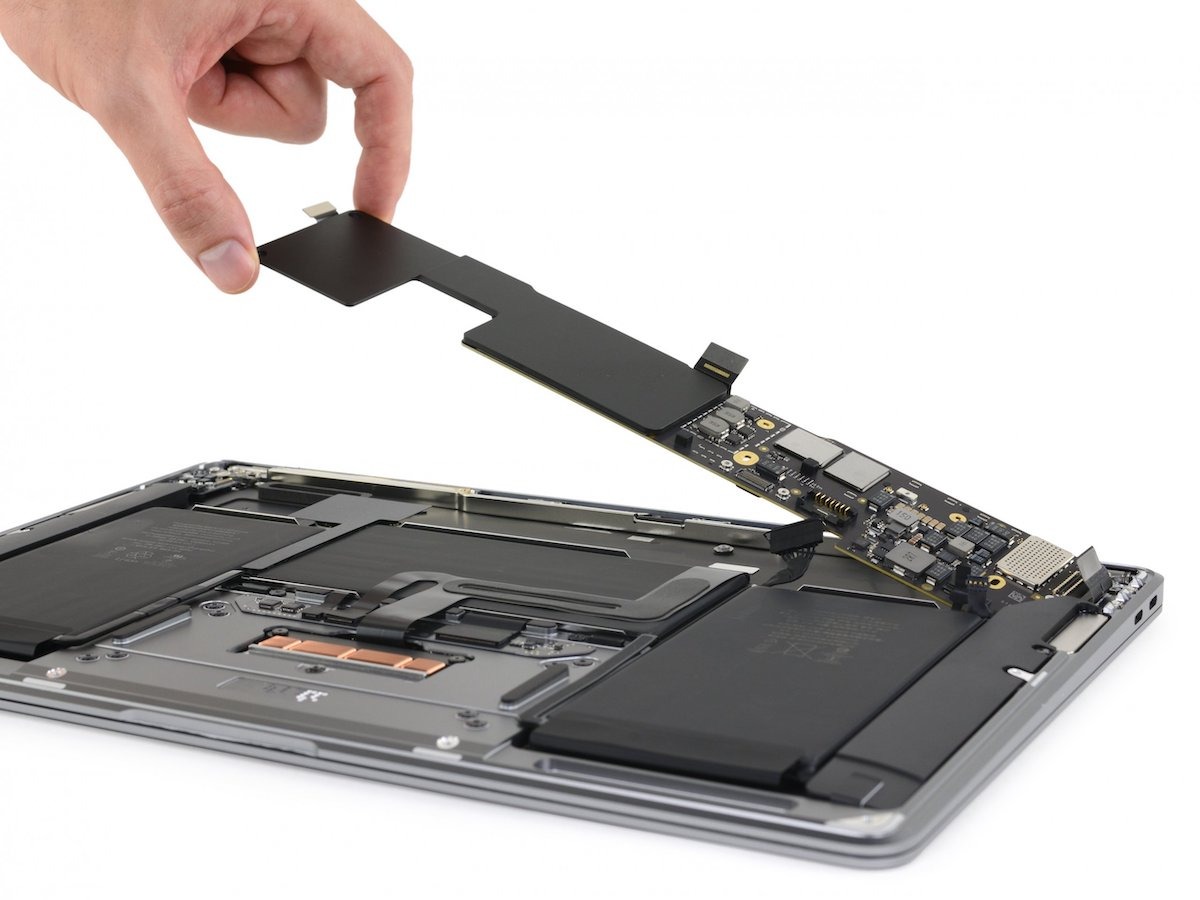
In looking at repairs you have to factor in reliability as well as replaceability. We're seeing a trend towards laptops becoming harder to repair but also intrinsically more reliable. No-one complains that laptop CPUs can't be replaced, for example, because CPUs are reliable enough that it's not an issue. We're well on the way to the same being true of internal flash storage. On top of that, Apple is reaping significant benefits in energy efficiency, reliability and performance from closely integrating components. That is something that benefits everyone who buys a MacBook. Hardly anyone benefits from removable RAM or SSDs.
I think some people mistakenly think that Apple could just stop 'soldering down' the RAM and SSD, but they must not realize how closely integrated everything is in the M1 MacBooks. The idea that Apple did all of this extraordinarily expensive R&D just so that they could sell a few more RAM or SSD upgrades is bordering on a conspiracy theory. As I said, there is so little demand for 16GB MacBook models that Apple doesn't even stock them in stores.
Overall, I just don't see any evidence that Apple has bad motivations here. It seems to me that you are just speculating uncharitably.