This is not a pro-Brexit opinion, but it is also interesting how much of the worst prophesies did not happen. Tech business in particular mostly stayed in the UK and London is still the best place to be within the European geographical region. And London is still the financial capital. Very little moved to Paris and Frankfurt. Indeed London is still a very attractive place for EU skilled labour despite the added friction.
> but it is also interesting how much of the worst prophesies did not happen.
So, I think the real issue was the new investments (net FDI fell off a cliff for years after the vote). Generally companies won't move unless forced to, but new companies generally seemed to avoid the UK post Brexit.
In fact, Ireland benefited from a bunch of this, I worked for 1-2 companies who'd moved their headquarters and staff from the UK to IE because they needed an EU base.
> Indeed London is still a very attractive place for EU skilled labour despite the added friction.
Honestly, not unless you work in finance. I was offered a Big tech role in London a few years back, and it was basically my euro salary converted into pounds, so it didn't make any financial sense for me to move (which is easy because I'm an Irish citizen).
> net FDI fell off a cliff for years after the vote
I don't know what stats you're looking at. As a percentage of market share the UK is essentially where it was in 2017 and inline with historical trends. Moreover it has been recently increasing largely due to poor conditions in Germany.
Actually, looking at more of the sheets I'm coming to the conclusion that I don't understand how they're measuring things here, so I dunno what's going on honestly.
5 years ago, the value of companies listed on the LSE was 2 times the size of Paris. Now they are almost equal (Paris was first in 2023). In 2024 only 18 IPO took place on the LSE, the lowest number in the last 20 years. London is still the major place for financial services but other European center are growing faster.
Before Brexit I knew tech companies where they had a UK EMEA HQ, where they would have people looking after all regions, with people living and paying tax in the UK. Post Brexit, so many people started moving home, companies started opening more local offices in region. So the people who would have been on high wages paying high tax here, sending in the UK, are not back in their home country.
London is still one of the two financial capitals of the world (the other one being NY). In finance no-one left London after Brexit, at most they shifted the legal minimum into the EU as required and not more.
a) Having English be the national language is a massive advantage which only Ireland shares (and Ireland has plenty of American tech outposts). That's an advantage people don't mention often.
b) The EU keeps adding regulations, which make it a less attractive place to invest. The UK seems to copy each of these regulations though, which maybe makes this a moot point.
But I think ultimately, it's probably down to network effects. The same way Twitter/X stuck around even though basically everything about it changed, cities might do the same.
Ah thought you meant Brexit agreement compelled UK to copy new EU laws. UK politicians (both Conservative and Labour) love to look around world to copy any regulation targetting business, especially ones targetting tech and online censorship, not far off actual copying China's great firewall...
No I mean more the fact that Britain seems to have left the EU at least in part because they didn't want to deal with EU regulation superseding what the UK wanted...
...and then proceeded to basically copy every EU regulation. Whatever one's take is on EU regulation, it's just odd to me to do that because you basically lose the upside of the EU while keeping the downside.
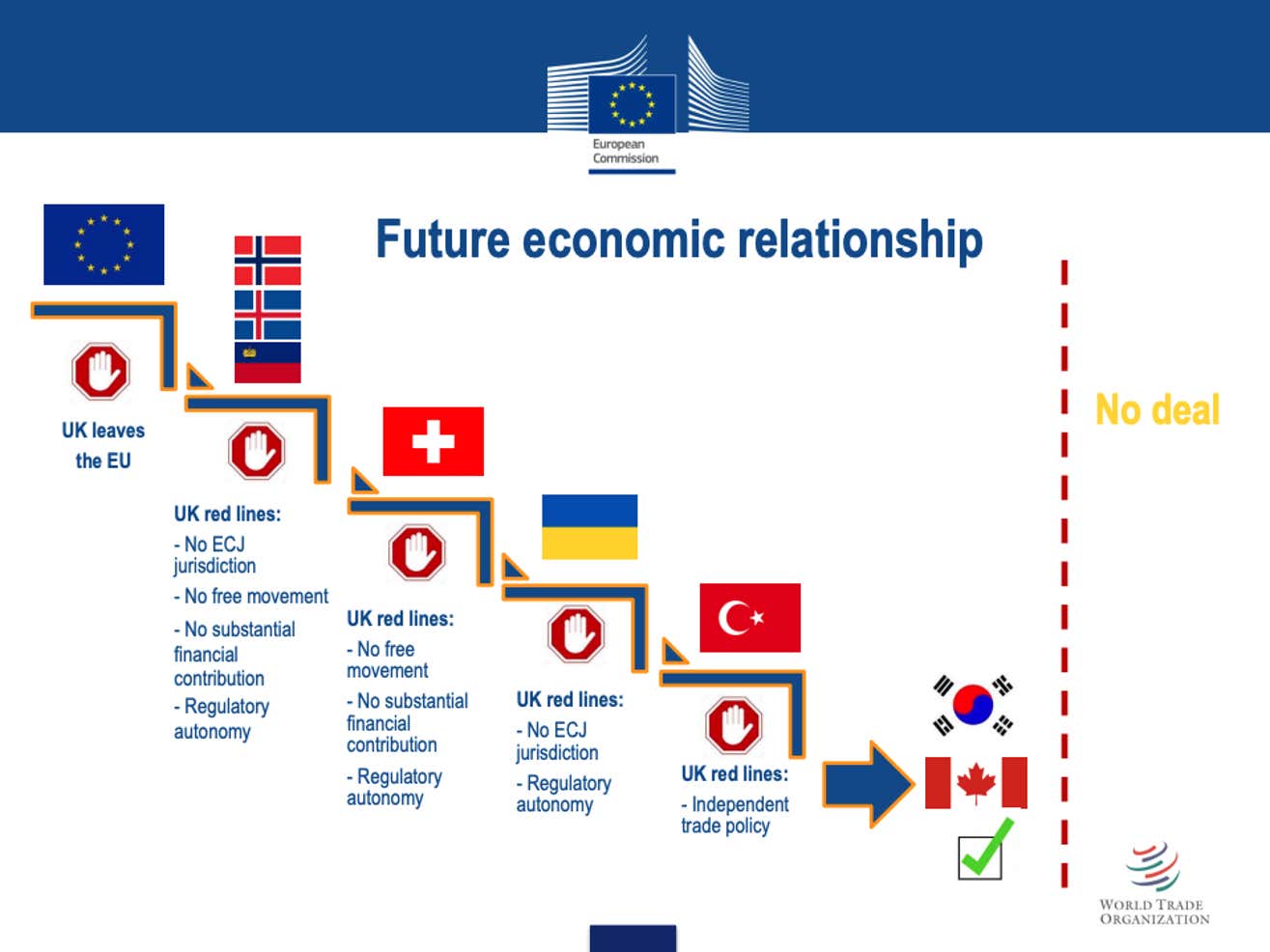
The Brexit the UK ended up with was pretty might the lightest possible Brexit. This is exactly because anyone in power rapidly understood anything else would be a huge disaster. It was interesting watching a succession of "leaders" scream that they would deliver true Brexit, be given power, and then lose their nerve only to be replaced by the next "true" brexiteer.
The result is we suffered only 10% of the maximum damage in exchange for 0% of the "advantages" (can't sign our own trade deals, no say in the EU, must take rules, last in queue for access etc).
I think this is actually the worst outcome long term: a car crash hard Brexit would have all but assured reentry in the long term. Instead we will be in Europe for all practical purposes but dragging our feet at the back...
I was listening to some report about the economic effects which said that the economic impact of increased immigration had somewhat offset the negative impact s of Brexit :-)
As for finance, it seems a complicated area. Some UK companies seem to list on the NYSE now which is a reminder that when we lose things they don't only have to be lost to the EU.
Yeah, there's definitely a world where all EU/European businesses centralised in London. Honestly though, short term national interests have stopped that happening for 30 years now, so I don't expect any changes here (even though it's probably the best thing the EU/Europe could do to help more new tech businesses get off the ground).
The predicted overnight exodus didn't happen, but I'm certainly seeing a slow bleed out happening. We've had attrition on London headcount & all the replacements are in EU.