Hacker Newsnew | past | comments | ask | show | jobs | submitlogin
Ask HN: Why would I want to pay with my phone?
63 points by sbt on March 5, 2015 | hide | past | favorite | 85 comments
Dear mobile payment pitchers of HN,

Why would I want to pay for anything with my phone, rather than a card or cash? Please enlighten me.

Specifically,

(1) How is this more convenient than using my card or cash? I don't buy the argument that carrying a wallet is an inconvenience. A card takes virtually no space.

(2) Why would I want to trust my smartphone, which has a battery life of about a day, with the ability to pay for something in a critical situation. My card and cash does not run out of battery. Furthermore, I have had three different smart phones die on me permanently in the last two years. I don't want to be stuck somewhere and not be able to afford a taxi because my phone is dead.

(3) Why would I trust information about my purchases with a company like Google. They already know most things about me, but how does it benefit me to also give my purchase data over to them? So they can ad retarget me more easily? Fuck that. What's next, my vital signs uploaded to Facebook in real time?

Thanks.


I'm in the payment space, so I have a few thoughts on this. 1. Payment through mobile wallets prevents employees and corporations you're paying from actually getting access to your card number. This removes the risk of fraud and theft by employees skimming numbers from your card and from corporate DB breaches

2. I am absent minded and often accidentally leave the house without my wallet and this allows me to still pay for things

3. Phones might die if you drop them or the battery dies, but I'm a lot more attached to my phone because I use it several times an hour. I'm a lot more aware of it and am able to make sure that it's charged and available. Occasions of it breaking only occur at most once every year or two.

4. By using my mobile payment app, I have a clear view of my current balances in one place without having to open banking apps or websites and allows me to view my current financial profile without having to log in anywhere.

5. With cards, the company I do business with is able to build purchase data profiles on me and sell the data onto other parties without my control. With Apple, I know it's just about their 0.15% processing fee without data mining. With google, I know it's just for Google's internal analytics and not being sold onto data brokers for sale to potentially hundreds of purchase analytics companies.


#2 is a big one for me. As a father of two kids under 4, I can't tell you how disappointing it is to take the time to load them into the car take them to the grocery store, only to realize that I've forgotten my wallet while I'm standing in the produce section.

This happened to me about a month ago, but unfortunately my local grocer didn't accept NFC payments, so I had to leave.


I leave the house with 4 things. They go in different places.

Wallet, front left pocket.

Phone, front right pocket.

Keys, back right pocket.

Knife, clipped to front right pocket.

I pat my pockets anytime I'm leaving the house or the car to be sure I have everything. When I'm missing one I feel...strange.


Same here (different pockets, minus the knife, plus a space pen and notepad). I pat my pockets just about every time I stand up. Saved myself quite a lot of hassle by getting into this habit.


I couldn't do without the knife, I use it nearly every day for something. Opening a package, peeling an orange, etc.

What's weird is when I'm not wearing jeans or pants/shorts with pockets--say a bathing suit. I keep stuff in my hands, then--but I feel really paranoid and I keep checking and rechecking to make sure I still have my wallet/phone.

When I break this habit, I end up doing things like locking my keys in my car.


Having been using Apple Pay for about a month, 1 and 5 are the keys for me. After Target, Home Depot, TJ Maxx... I know I'm not responsible for any fraudulent charges (I've had 2 reversed a while ago), but it's still a pain to go through.

I know that any system is only as strong as its weakest link, so anytime I use my normal card I'm still at risk of whatever retailer I'm at getting hacked, but I figure that the more I use the EMV chip or Apple Pay, the more my card company and the retailers know there's another person out there that cares about this sort of stuff and thus one more reason to invest in the more secure POS terminals.

(4 happens anyway; I get a notification whenever my card is used, whether it's the card or the phone)


>This removes the risk of fraud and theft by employees skimming numbers from your card and from corporate DB breaches

Why not just follow the rest of the world and actually implement Chip and PIN instead? All the security benefits with none of the privacy drawbacks.


It's far from 'the rest of the world.' The United States has far more POSes than any other country that has fully implemented Chip and PIN. Considering even small countries have only switched over in the past few years, it's far from surprising that the US hasn't transitioned yet.

That being said, Chip & PIN is making inroads in the US. Visa is doing its liability shift in October of this year, which should make it more attractive to vendors.


I think i'm supposed to point out here that NZ (and Aus) has had a free national POS system in place since the 1980s called EFTPOS. really weird traveling in the 90s and having to start thinking about cash again... It works wonderfully - that's typically a cue to start buggerising around with it and we've just started that adventure with contactless credit cards that don't need PIN codes - what's the worst that could happen? ;-)


I didn't know that phone payments reduces fraud risk. That's a very good benefit. Do you know how it works for charge-backs?

To point #2, if you're absent-minded, don't you ever leave home without your phone? I hate those days. Worse than a bad hair day, IMHO.

I like the idea of fewer fees for merchants. Being a merchant myself, I think those fees are out of line with the service being rendered. Since cc payments are kind of a monopoly, it's nice to see some competition.

I think I'll have to set up an account and try it out.


I've paid with Apple Pay, and it feels much more pleasant in comparison.

Cash: Get out wallet, count out cash, get change that I'll probably lose anyway. I hate small denominations.

Card: Get out wallet, put card in machine, wait 10 seconds for authorization (I'm in Switzerland - their terminals take longer), sign receipt. I hate signing.

Apple Pay: See prompt on phone, which I'm already holding, with price and card info. Press thumb to button. Wait 1 second. Done. And I like thumb presses.

Not only does it save half the time on every purchase, but it obeys my arbitrarily finicky preferences on how I would like to pay. But you know what? Even if it seems like such a tiny detail, many people share those preferences, and the difference is more than enough to tip the scales of habit for those who do.


> Card: Get out wallet, put card in machine, wait 10 seconds for authorization (I'm in Switzerland - their terminals take longer), sign receipt. I hate signing.

For me in the UK, assuming the payment is under £25 my process is

* Get out card

* Press card against machine

That's it.

If it's more, I need to put the card in the machine and type my PIN in.


Card: Get out wallet, put card in machine, wait 10 seconds for authorization (I'm in Switzerland - their terminals take longer), sign receipt. I hate signing.

I am finding more and more that I don't have to actually sign anything when paying with a credit card. It is funny how removing that small interaction seems to make the entire process much simpler and faster.


I can't remember the last time I signed for something. These days (UK / Australia) its annoying when I can't just hold my wallet against the reader and have to enter my PIN


It is now about 4 years that I signed a payment receipt last time. In Europe. What card was you using? Even the AmEx cards have a chip now.


In the US I still have to sign things daily. Even the cafeteria where I work (Well under $10 for every purchase). Fast food you don't have to sign (or at least you don't have to sign under some limit which I've never hit) but every store I go to I have to sign (more and more on digital signing pads).


Europe must be ahead of the US in terms of card reading. I can't buy lunch without having to sign a receipt.


I can pay for parking here in Edinburgh using the RingGo app - which is incredibly convenient, means I don't have to hunt for change - which I rarely have as I mostly pay for everything else with a card.

I love the way it reminds you if your paid for parking period expires and gives you the option of extending by paying more - all without having to return to my car.

Edit: I also don't pay for parking very often - which means I'm even less likely to have change on me or in my car.

Edit2: If somebody allows me to contribute to leaving presents for colleagues through an app then I could go pretty much cash free!


Regarding Edit2: Splitwise[0] is an app my friends recently introduced me to. We tend to get together in groups of 6+ and then go someplace for a weekend. This app made our most recent such trip very easy to split costs on.

[0]https://www.splitwise.com/


This is the only instance where I do the "pay with phone" thing. For the same reason—I never have change when parking in the city (New Orleans).


Why would you want to listen to mp3s on your phone? Sansa Clip takes almost no room and its battery lasts longer.

Multiple personal items have already converged in your phone: notbook, calendar, Rolodex, flashlight, Game Boy, camera... This is just another one.

Each may not be much of an improvement on its own, but taken together it really is. People value this convenience so much that they will routinely accept lower quality of the parts (see the camera).

As for more direct benefits, it will probably be easier to manage. I use my bank's app a lot as it is.


I think the point is your phone is unreliable (battery life, dropping risk, cracked screens, etc) and paying for things is mission critical while listening to music is not. I take better care of my wallet than my phone. Lost phone? Buy new one. Lost wallet? Potential misuse of debt card/credit card and my cash is gone which is about half the cost of my phone right there. Much worse than the 200-300$ it costs for a new phone.


For me it's not a replacement, it's an alternative. I don't consider CCs or cash as replacements for the other (outside certain domains where only one or the other is viable), but instead options for payment. I prefer cash because it keeps me on my budget better for daily spending. Now we have CCs, debit cards, cash, checks and phones (which are tied to CCs or debit cards typically). I already use my phone to pay for some things, anyways (Starbucks, I often get gift cards from family at Christmas/birthdays). This just makes the phone more useful as a payment device.


So you've answered your own question. If you paid with your phone, you wouldn't have to worry about taking care of your wallet.


Except my phone is unreliable. My credit card doesn't run out of batteries or break if I drop it.


Your credit card gets lost if you drop it.

But I'll concede that battery life may be an issue for some people.


I think the OP's point is that the phone is never going to replace cash/cards because going without an mp3 player or notebook during a night out or work day is NBD, but surviving without any access to money can make things very unpleasant. Also, I'll always need a wallet for ID, insurance info, etc. What's one more piece of plastic?

So it makes sense I wouldn't want to carry around a phone + an mp3 player. But if I'm carrying around cash/cards everywhere anyways, the phone needs to have an actual substantive benefit over paying with plastic. That advantage has to overcome the perception of privacy violations and the cost of changing personal habits.

* The days of the average consumer not caring about privacy are, I think and hope, coming quickly to an end. I doubt anyone will give up gmail out of privacy concerns, but any time there's discussion of adopting a new consumer product, average Joe off the street will probably cite privacy as one concern. I don't think the "novelty factor" is enough to win over the average consumer's data these days.


> I doubt anyone will give up gmail out of privacy concerns

I did, years ago, for that very reason. I still have the account, but I never use it, and mail never goes there. Sometimes I use it for testing something, but I don't use it.


If you're very concerned then cash or physical card for redundancy may make sense. But that's also true of a map for example, yet doesn't hurt adoption of Google Maps.

And is paying for things really that crucial on a daily basis? I can only think of minor inconveniences like having to go home before getting groceries after work. Although that's probably a matter of lifestyle and location.


Well, my card doesn't need a battery but works just like mobile payments (take out, press against reader, done) whereas google maps has many advantages over a paper map (i can find exactly where I am, search for things & get traffic updates).


Phone payment app can also feature improvements over a card, like knowing and showing your balance, helping you track spending, prompting you to use discount coupons... whatever the provider can come up with.


I can't say I gave up gmail out of privacy concerns, but privacy concerns motivated me not to sign up for it in the first place.


I've had my card replaced three times in the last two years due to data breaches (Target, Home Depot, undisclosed). Every time I've had to re-setup all of my subscriptions. If there was no number/cvv/exp date to steal, there'd be no fraud without them having my phone.


And why would cell phone payments not be subject to the same problem if they were as widespread as credit card payments/


ApplePay uses one time transactions. Even if it's intercepted, you can't reuse the information.


So then the problem of having to change the information for any recurring payments you have is obviated by a total inability to set up recurring payments? I suppose that's one solution.


Nope. Recurring payments can use the same token, but that token is not a card number that can be presented to another merchant if stolen. Also, if a vendor is breached, only the tokens need be invalidated.


I'm 90% sure recurring payments still work. I can't imagine them going to market with something like this without considering recurring payments.


IIRC for recurring they can use the same token or they get a slightly different token. Either way it's like using a different card with each merchant so you can easily track back who got hacked.


I imagine it will eventually be worthwhile to remote-clone whatever's on a phone, or MITM it somehow. Maybe that's "impossible by design" (it is to laugh), but the 2G phone downgrade and the export security downgrade of recent reminds us that the internet is full of surprises.

"Don't be too proud of this $SHINY you've constructed."


Aside: Did you just manage to combine references to Star Wars and Serenity/Firely there?


Ah, good catch, I didn't see the Firefly until you pointed it out.


I think the world needs a "reference to fiction" sentiment analysis browser plugin - probably with a tvtropes backend for maximum distraction capabilities.


There's an old adage: Cash is King

Whether they were referring to the debits and credits found in bank accounts or the actual fiat paper I'm not sure, but holding cash in actual paper (granted you have a stable government) is in some way a deprivation of total control and regulation of your life.

The corptocracy is very much similar to government in that they will willingly hand over data to save their own asses (I don't need proof on this one, cause it's common knowledge now) and also willingly exploit you through said data to increase profits.

In some countries people will simply flat out refuse to use even credit cards, simply cause they distrust their governments, which I think is a rational move.

Cash also makes life easier for your mom and pop store who can't jump the same tax loopholes as GooAppFace with their Irish-double-Dutch-cayman-filter accounting-foo and end up paying a big portion of corporate tax through the central (regulated and monitored) banking cartel.

At the end of the day, those who use it, trust it and it adds some utility to their lives.

For those who don't, their is only utility to be lost, which is why they stay away (and which is probably why I think it equates to most of the world who stays away).


I don't like the loss of privacy with phone payments, but otherwise, it might be a good option to have available. With credit cards, I never give out any personal information, such as my phone number or zip code. With a phone, you don't really know what is leaking out, at least I don't. That being said, I would probably use it in a bind.

I like cash when possible. Convenience (other than making sure you have it with you) and privacy are great. Security is a concern, but with most people carrying credit cards it's gotten better. Everyone assumes that no one carries a lot of cash any more, so thieves are less likely to be aware that you are a lucrative target if you look prosperous. If you lose it, you have to physically track it down to get it back, so that's a bad part. I don't like to lose things, so I've never lost any significant amount of cash yet.


I find myself asking this question. I've found it entertaining to play with. But unreliable even in the few stores that support it. And I don't want Google to have more of my info. (And they just bought out Softcard, removing that option as well.)


The convenience argument is hard to make with reason - to some extent, you have to try it and see if it makes a difference for you personally. For me, it has changed my shopping behavior at Whole Foods from rare, carefully planned visits, to more frequent visits to pick up smaller numbers of items.

The reduction in overhead for picking up just a bag of coffee and taking it to the express checkout feels pretty dramatic, even though it might not be that much shorter in wall clock time.

Battery life seems like a genuine concern. I have an iPhone 6+ which easily lasts me all day, but I could see this being an issue on phones with less battery capacity. I will be curious to see whether the apple watch can still do payments in it's reserve power mode.

As to trusting Google - that's a personal choice. It clearly doesn't benefit you for them to have your purchase data, and I wouldn't use a Google owned payment service for that reason, however there are a lot of people who experience Google as being able to provide better search or Google Now cards based on knowing more about them, so would be happy to give them more information.


I was working on my own payment startup idea a few years ago - and paying by phone was a surprisingly huge marketing bullet for most people. Paying by phone was a necessary side effect of the real business (crypto based, privacy protective, a few other things)...

...but what really got people interested was the paying by phone part.

Had I had a real brain, I would have pivoted (or at least held my nose) and worked on something "Square" or "Stripe" like, to get customers and money and traction, then added my secret sauce once I was already in the market.

Why was this so compelling? Because most people leave the house with 1) their phone, 2) their keys, 3) everything else.

If they forget 2, they go back for it right away.

They can be in line at Starbucks or the grocery store or wherever before they realize they forgot 3. If they can pay by phone, they're good.

Thems of us here on HN who wallet-pocket, key-pocket, etc., are in the minority. We are in the minority for most things. That's why so many of us have a problem connecting with broader markets, let alone mass markets, at least until we realize how to recognize and understand what the majority are doing.


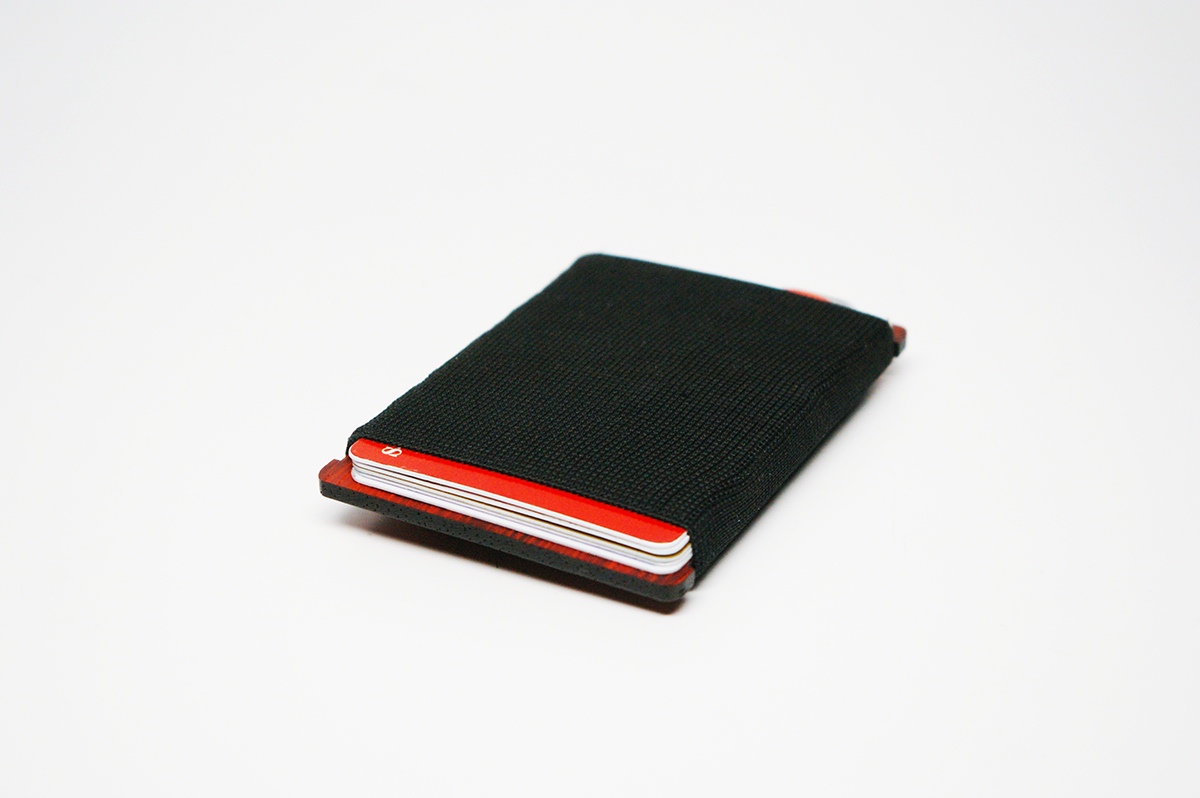
Slightly OT, but some here might be interested in a minimal wallet. I use something like this:

http://toolsandtoys.net/wp-content/uploads/2013/02/cinch-min...

I don't carry cash, just cards. This is much, much smaller than a wallet. Completely removes the pain of carrying one around.


There's also secrid, they are RFID proof and in metal, nice protection for the cards. http://www.secrid.nl/en/


I'm just going to address your three points with my personal opinions.

1. From a convenience perspective, it is easier for me to manage payments from my phone. That's less space being used in my pocket, and less physical operations that need to be completed for me to pay for something. Yes, an individual card does not take up much space, but I rarely carry just my debit card in my wallet.

2. The battery life of my phone is decent enough for me to not worry all that much. I recently switched from iPhone 4 to Droid Turbo and find myself only needing to charge every two days. Also, I use a car charger while I commute if I'm streaming podcast or music, so for the most part I'm not concerned with my battery.

3. Unless you buy things with bitcoin or the like, someone is collecting and analysing your data. I think Google does a better job at security than POS readers and vendors. I've already had to replace my card after home depot and target breaches.


Honestly now that I've moved to a cash based society I don't even miss my debit card.

With the debit card paying meant fiddling with an often broken terminal. If my card got rejected I could be waiting in line at wal-mart going through credit cards. Even the simple act of having a card rejected (wrong pin, nothing on a prepaid, or etc) was embarrassing.

The only embarrassing story I have after going cash only was the time I forgot my _entire_ wallet. I just handed the basket to the clerk and ran home. The only big concern here is I'm legally required to carry my alien registration card.

Without a credit card I have no worries of identify theft from highjacked terminals. Plus unlike Canada you can hand over a 100 dollar bill and no one bats an eyelash.

I always have coin for vending machines. And cash-on-delivery is still a thing here.

Everything has just been nicer with cash.


1) Well, if you don't buy it then I don't know what to tell you. But I am constantly forgetting my wallet and cards, while I rarely if ever forget my phone. Tim Hortons app has been my only option to pay for lunch more than a couple times.

2) Nobody (or at least hardly anyone) is advocating eliminating hard currency or credit cards. Phone payment is just another option. Why do you see this as an either/or situation?

3) Google is not the only player in this game, and even then I don't think I share your concerns. Ad targeting based on purchase history has been a thing for many years at this point, and it's never been an issue for me. If it was though, I would just switch to Apple's solution.


The trouble with payments is that end users don't see a problem with the current system.

Vendors hate the system because they'd like to pay less in fees.

Banks like it the way it is but they know they'll need to innovate in some way to stay on top.

As for Apple, it is one more way to differentiate their products. Note that they are working with and not against the banks on this one.

And the media? If they had made 1% as much noise about google wallet, which isn't too different from apple pay there would be an entirely different conversation. These are the people who get excited about every android game 'console' you can play candy crush on but censor the PlayStation vita which has real games.


The two biggest pain points in the payments industry are convenience and security. Our most secure solution, cash, is pretty inconvenient. You need to know exactly how much you are going to spend and need to get more from an ATM or bank. Our most convenient solution is credit cards, but these have proven to be fairly insecure because one account number is linked to many transactions which can be duplicated. If paying with your phone could give you the security of cash with the convenience of a credit card it would be disruptive. Let's wait to see what happens in the mobile payment space.


Apple Pay makes credit cards a little more anonymous. The retailer can't connect the dots like they can with a regular card and you don't end up with a ton of change in your pocket like with cash.


1/ I'm thinking of Apple pay now. The convenience lies in the fact that you don't have to type in your PIN / sign the transaction receipt. Also, when paying with cash you get change. Personally, I hate change. But I don't think I'll be leaving my wallet at home any time soon.

2/ Not all taxis (at least in Europe) have the possibility of paying by card. Using an app gets rid of that problem. Also, if you're using taxis in a business context, you get automatic receipts.


1) Can't you just use a contactless card for this?

2) Are there any taxis you can pay with a phone but not a card?


1) Sure, that works as well. But most countries don't have contactless cards, and those that do only allow smaller transactions without entering PIN (i.e. < £20).

2) There are apps like Uber and Hailo, where you automatically get billed at the end of your ride. Hailo is used by a lot of London black cabs, and most of those don't have a card reader in their cab.

Don't think there is an easy answer. If the contactless readers accept both cards + apple pay, that would be nice. Some people will prefer one over the other anyway.

I do know I have a significant amount of cards (some personal, some business), and being able to leave some of those at home is great. At the end of the day I don't really want to walk around with 10 debit/credit cards for various purposes. That's one problem Apple pay and these apps solve (to some extent).


2) Uber to an extent but that's just storing your card information.


GP is referring to Uber\Lyft etc


> (1) How is this more convenient than using my card or cash? I don't buy the argument that carrying a wallet is an inconvenience. A card takes virtually no space.

Even if it's not an inconvenience to you that doesn't mean it's not an inconvenience to anyone else.

I for one dislike carrying my wallet and have opted to get a phone case that can hold my cards (cc, and drivers license). I'd imagine if I was in a big city and could pay with my phone I wouldn't need those cards either.


Basically, just look at how Uber changed our way to pay, and apply it to every daily situation you can imagine: Starbucks, Parking, Restaurants. At first, the Uber payment process surely didn't sound as important and convenient as it is in the real world. It also seems that in tech nowadays, every second virtually "won" in a daily task is another step towards the future. But is it ? :)


Think of it as a stepping stone. Someday you'll likely be able to walk into a store, grab what you need, and walk out, all without stopping at a register to pay.

To (3), your credit card company already sells your data to advertisers. I'd be surprised if the googles of the world don't already have a feed of that information.


It would be nice to need one less things(wallet), but the truth is, you still have to carry your wallet. Most places still don't accept NFC payment and even if they did, phones die. I'm not really interested in a wallet that can run out of battery power and leave me stranded.


Maybe some day our driver licenses will be tokens on our phones. Insurance cards too. And maybe the car's registration will be a token on the car's dashboard.

So when you're pulled over the cop will just scan your devices. Win win! /s


[deleted]


These aren't quite real arguments, though.

(1) Adding up: some people surely spend more than I do. But I only actually buy things maybe 8 times a week. It doesn't actually take 10 seconds to enter a PIN, but even granted that -- I could potentially save, what 10s852 = 69 minutes per year saved. This is why no one ever said "I think I spent too much time entering my bank card PIN" at the end of their lives.

(2) Bank systems do occasionally go down. That will continue to happen, but you'll also be affected if your phone battery runs out, or you drop it, or whatever. More complicated system = more frequent failures.

(3) Nope; I can avoid feeding Apple/Google a decent amount of info, by choosing carefully what services I use and how I let myself be tracked. If my phone were my payment method, I wouldn't have much choice over it any more.


(1) Reminds me of a friend I had in college. He'd optimize everything. But he never sat down to crunch where his time really went. Sure he saved an hour a year on this, or 2 hours on that. But he still watched a couple hours of TV a day, that's about 28 days a year he could've reclaimed (14 if he just cut it back to 1 hour). We spend around 120 days a year sleeping. About 90 days spent at work or commuting for the average full-time employee (assuming no overtime). That leaves around 150 days for leisure, pleasure, relationships, other obligations, etc. Seems silly to try and get an hour of that back instead of trying to get days and weeks back. Once you have those weeks back, that 10 seconds extra at the register doesn't seem so bad.


On your first point, what about credit card tap? no signing needed and no entering pin on orders less than $75...

How is paying with a phone more useful than that? (other than you could keep track of you transactions offline I guess)


A lot of the reason is to do with the Cashless Effect - we pay more when we can't physically see the money.

http://coglode.com/gems/cashless-effect

A device is an even more abstract tool than a card due to it being multi-purpose.

Jerome


The best payment apps are apps like Uber, where the payment is no longer visible, and the app adds some other value to the user. I agree that general payment apps that aim to simply replace cards don't have enough of a value proposition.


And of course this question is exactly why none of these services have taken off.


For some people #1 is a factor, one less thing to carry is a selling point.


Why would you want to use a credit card over cash, or checks?

There are certain advantages. Not in all cases, but having it as an additional option may afford additional security, anonymity, and faster transactions.


so we can sell you things you don't need nor want. Gotta keep the juggernaut rolling.

that or we have to remove the tiny amount of effort people already make to do things, so they can just sit and consume

#cynic


Cynical but perhaps right.

All the sales shit I see is about conversion rate. If its only a tiny step away from accidental to make a purchase then your effort to make that sale is low. Also if the value is low, impulse purchases are likely. Small purchases have little concentration on totality so you end up making lots of simple purchases effortlessly.

Result: Profit.

(don Ferengi ears when reading the line above)


* Tokenization (Little to no chance of fraud)

* Much faster than a card or cash

* No signing (In the US we still have to sign for nearly everything)

* One less thing to carry (I hate carrying a wallet)


All of the mobile payment stuff I've seen seems to be about debiting your account.

Are there mobile payment systems that are linked with a credit card instead?


Why do I need a purse? I don't want to have to carry a purse anymore.


Minimize fraud with your credit card to the fullest extent.


You wouldn't. It's a way for mobile networks and google/apple/MS to muscle in on the payment market, and for both them and shops to increase the amount of personal data they steal.


Yes because CC companies and stores would never do that /s

Apple Pay actually makes it impossible for stores to do this and Apple has said they don't care about trying to sell/collect your data (and I trust them more than Visa).


Tokenization.


This is the correct answer if you live in the US. Tokenization is massively more secure than stripe and signature. As long as the phone isn't notably less convenient than your card, you should want this.


I'm with you sbt because I just don't see any real reason for people to use this. However, I may live in a bubble because I just don't have my phone in hand all day long. I even leave the house without it occasionally! (The horror!) I also turn off wifi and mobile data when I'm done using it.

Unless every merchant accepts phone payments, I don't see how anyone could walk around with just a phone in their pocket anyway, so point #1 may be moot.

Don't worry about deciding on this too much though because I'm sure we'll all be chipped before too long and then you won't have a choice but to be tracked. At least things will be convenient though!


Guidelines | FAQ | Lists | API | Security | Legal | Apply to YC | Contact

Search: