This is not the kind of problem it's being made out to be here.
First of all, Tritium is an beta emitter, blocked by a piece of paper or the skin. It's not dangerous in the environment unless it's consumed. Even better, it does not bio-accumulate, because it's water.
Second, the half life of Tritium is 12.4 years.
Consider this excerpt:
"""
The World Health Organization’s standard for tritium in drinking water is 10,000 becquerels per liter (34 ounces). According to Mayumi Yoshida, a TEPCO communications officer, Fukushima’s stored water contains between 1 and 5 million becquerels per liter.
"""
So our radioactive waste is acceptable as Drinking Water at 10K.
Lets do the math
5000000/(2^9) = 9765.625
9*12.4 = 111.6 years
No one knows what do about the Radioactive Water?
How's about we wait few generations, and drink it!
This is child's play next to the real problems posed by long lived (400K+ year long half life) bio-accumulating isotope disposal.
I wouldn't mind if they dumped it in the ocean TBH.
At no point since the meltdown began, through when radiation began leaking into the atmosphere - of which was dispersed and detected around the globe, has any entity associated with the Fukushima plant or Japan shown any signs of willingness to be upfront and transparent about the situation.
The US Navy seemed to be one of the only real orginizations who offered an upfront warning of radiation exposure to citizens. [1] [2]
Considering we have lots of nuclear reactors floating around (ships and submarines), some of which have been destroyed and ended up in the ocean - it's probably the best place to put this stuff.
The world's oceans are absolutely massive and already have millions of tons of radioactive material dissolved along with plenty of cooling power. Maybe the specific dumping zone would be a little radiated for a bit but that can be solved by spreading it out in the deep sea and through natural ocean currents.
Your second sentence doesn't capture what is being said, not at all. It wouldn't contribute significantly to the amount of tritium that is naturally in the oceans (here's a dismissive comparison: it isn't even the sort of waste you would bother with a dumpster for), and it would dissipate in ~100 years.
They're going to run out of room for tanks. And there must be access, because the tanks are going to rust out, and will need replaced. So storing the Tritium-contaminated water for a century or so is nontrivial.
Again, we're talking about something which is maybe 5 million becquerels per litre, but if it was only 10,000 becquerels per litre, we could just drink the damn stuff.
So if you diluted it all 500 times, the problem goes away. 620,000 tons of water is about...2 supertankers. So if you mixed it with 1000 supertankers worth of water, you could safely drink it (at least as far as the tritium is concerned).
Now, where near Fukishima could we find 1000 supertankers worth of water? Right, the ocean.
tdy721 wasn't joking; dumping it all into the ocean is a perfectly sensible (and safe) solution. (Although as the article notes, it's politically a non-starter.)
From an ISU site, I get that natural tritium production is ~4E6 Ci (~1.5E17 Bq) per year (from cosmic rays) and that the global steady-state inventory is ~7E7 Ci (~2.7E18 Bq).[0]
From the Nautilus article, I get that there is now ~6E5 Mg contaminated water, containing 1E6-5E6 Bq tritium per liter. The overall range is ~6E14 Bq to 3E15 Bq, or between ~0.4% and ~2% of annual natural production.
So yes, it's not such a big deal.
But now I'm curious about the magnitude of other anthropogenic sources.
Something to think about is my Canadian friends used to spend enormous amounts of energy to purify heavy water for their CANDU reactors. Sending them two tankers full of the best "raw refinable ore" on the planet is likely to put smiles on their faces. Yes I'm well aware that heavy water is deuterium and 1 in 700 atoms of H2 is deuterium and 1 in 700 atoms of naturally sourced non-H1 aka mostly-deuterium is the tritium we're talking about... the point is they know how to isolate it, handle it, and have a use for it, or in relative terms they are likely the best people on the planet to do the job (not to disparage any other countries with heavy water programs, intentionally anyway).
Or send over some container ships full of canadian machinery and jets full of canadians and refine the "ore" into salable product on Japanese soil, maybe right next door, whatever.
The assumption being made is this "waste" is useless, like coal fly ash or something, rather than being the valuable ore that it is.
Politically it could be a disaster, whats going to happen to the revenue from D2 and T2 sales other than infinite screaming about infinite possibilities? Everyones going to want a cut of it and the management and accounting costs might exceed the actual revenue...
Is a good idea because in the ocean will harm the main source of food of Japanese people, spreading food panic.
And because in the ocean will harm fishes, shellfishes, corals, other valuable forms of life; and there is no more than 50 living japanese right whales in all the planet.
And because the main species targeted by fisheries in all the planet earth is the peruvian anchovy. Since Fukushima we are seeing some strange death mass events of non human anchovy eaters like sea birds, seals and whales from Alaska to Peru. The cat's food tin that we open in our kitchens is made of peruvian anchovies flour. Your beloved pets will have more probabilities to die from cancer.
And because there are maybe thousands of cases of TEPCO shamelesly saying: 'oops, hundreds of liters of our radioactive waste are dumped to the sea again, how bad luck' since 2011. We simply can not expect them to act responsibly after repeatedly lied everybody in the past. They will use this easy way out to quickly dump anything they want to the water ("oops we forget again to classify and separate radioactive atoms from the water dumped. Is such an expensive process... how bad luck")
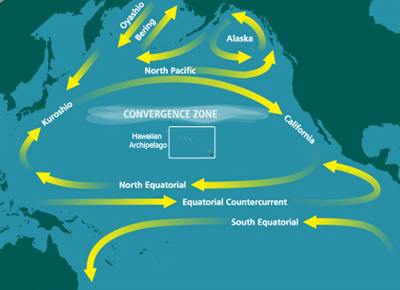
And because all oceans are connected by sea currents and radioactivity travelling with currents and migratory fishes will reach American coasts in a few weeks.
And because animals are made of water in a 60-95%. There is much more water than fat in a human. And rain is made of water also.
And because this is not a game of probabilities. To have only a chance of 1% of finding a tiger is not the same idea as "this tiger is 99% harmless".
Oh come on, we're talking about 4 grams of tritium.
Hydrogen bomb tests are estimated to have created several hundred kilograms of tritium, the bulk of which went straight into the oceans. No impact on sea life has been measured.
You list a parade of horribles, but the cold fact is that there is no theory as to how any of those even might occur. Anchovies are not going to die because of a couple grams of tritium. Nor will your cat get cancer. Radiation is not magic, nor is a taboo. It's a physical phenomenon with well understood characteristics.
(And, again, even if you're right—and the entire scientific community is wrong—if 4 grams of tritium would do all that, what do you think the hundreds of kilos from nuclear tests did?)
> Hydrogen bomb tests are estimated to have created several hundred kilograms of tritium, the bulk of which went straight into the oceans. No impact on sea life has been measured.
This is just wishfull thinking. A clear and well documented impact on sea life with a lot of local extinctions can be easily checked still 50 years later, in fact. Nothing growing in the island is safe to eat currently.
We're talking specifically about tritium. Under normal circumstances, there's maybe 4 kilograms on the Earth's surface. The nuclear tests increased that by multiple orders of magnitude, ejecting hundreds of kilograms into the stratosphere, whereupon it promptly precipitated back out into the earth's oceans.
1) Your link does not discuss tritium. Tritium is a specific substance with specific characteristics; you can't just lump it all under "Evil Radiation" and make meaningful conclusions.
2) Whatever effect tritium would have would be global. You talk about local extinctions, but we're actually looking for evidence of massive global extinctions. The early 1960s (which saw peak tritium levels) are not known for a huge spike in inexplicable extinction events.
3) Not only did the tests spread it everywhere, but ongoing runoff means that rivers have been pumping tritium into delta regions. Almost a kilogram of tritium was pumped into the Gulf of Mexico over the last 50 years. Again, no impacts from the tritium have been detected; whatever impact it might have had was drowned out by all the other much more serious crap we humans were doing.
4) Again, there's still no theory as to how tritium (specifically tritium, and not, eg, radioactive cesium or iodine) might do all this crazy stuff. I'm just pointing out that there's also no emperical evidence either, and thus, no real reason to think our entire understanding of how radiation impacts living organisms is wrong.
All of which means that people worried about the impacts of 4 grams of tritium on the Pacific Ocean are—to be charitable—innumerate. They're certainly wrong, because we've already dumped something like a HUNDRED THOUSAND TIMES more tritium into the Pacific ocean than that, and we literally have been unable to detect any impact. It's absurd to think we could even measure the impact of 4 grams.
Those are the numbers for human safety, not plankton (which are smaller and more vulnerable to chemical damage) or sharks and whales (who are bigger and would be exposed to more radiation overall).
This is not about 'fuck TEPCO', is about 'Should we trust still in what TEPCO says?'. There is a well documented chain of lies, accidents, and surrealistic mistakes from this company in the last four years.
I don't know enough about the claimed process of purification so I could be wrong, but I'm understanding by the article that tons of radioactive saltwater are magically converted in yummy distilled water and that tritium is the only cause of concern. It reminds me the same old rethoric: "they are clever, they know how to do this, don't make questions, nature will gobble the problem and we all will be safe and happy again".
I think that is reasonable to be sceptic in this case.
Are we talking about to dump distilled pure water or saltwater to the sea?. Is a different situation. It is saltwater there is a lot of things about to care, not just hydrogen. What happened with the dissolved salts and organic matter in the radioactive saltwater?.
And of course, how we could control the real composition of the dumped water?. Just because TEPCO promises us that this time is safe?. This is also a legitimate question. Are we just sending a clear message of 'do as you please with the waste'?. This could be a huge mistake in my opinion.
I don't trust TEPCO at all. I'm interested in the discussion we're actually capable of having: if you have a large and growing number of tanks full of tritiated water, is it better to store them aboveground, or dump them in the ocean?
To dump them in the ocean is irreversible and basically unpredictable. Maybe could entirely wipe species that filter the water, like the right whales. Maybe could create malformations in cod eggs for example, leading to a small percentage of surviving cod larvae. As we need thousands of eggs to have a single adult cod this could quickly escalate to the entire collapse of the population. All commercial fish species and fishing grounds are currently under a big (increasing) pressure by fishermen so this is not a good moment to do this experiment.
There is available space in Fukushima for more tanks. Nobody lives in the area and if properly designed to be durable seems a safer option. We have the technology to design such containers.
It seems pretty easy to do the math on the dilution. What is the specific effect you're concerned about?
If the question was just "should TEPCO keep paying", I'd agree.
But that's not the only question.
In the ocean, the tritiated water gets diluted, quickly, to levels asymptotically approaching ambient beta radiation. A mishap with the tanks on land however exposes the land ecosystem to potentially concentrated radiation.
I'm deeply concerned about the possibility that tritium is just a red herring in this case to obtain license to dump radioactive water to the sea 'ad libitum'.
If that's what you believe, you don't need to invent arguments about how tiny amounts of tritium are going to cause mass extinctions. Just say "I don't trust TEPCO that it's just tritium" and leave it at that. Surely there's something --- large amounts of pure plutonium? --- we can all agree shouldn't be dumped into the ocean.
This is the fundamental problem that most pro-nuke people (such as myself) don't understand. In a world of ignorant people driven by mass media, reality no longer matters and can be avoided, must be avoided, until after it starts killing people. Until the last human dies of lung cancer from coal burning, we simply cannot have nukes, no matter how realistic the "star trek" outcome looks. Its a pity, I like nukes, because I like living.
Spend a kickstarter to dump it down a volcano then. The point I was trying to make (poorly, apparently) is that it's stupid that this is actually a problem at all, there seem to be a number of viable and cheap solutions.
What I learned during the Fukushima disaster and ongoing clean up is that the human race literally has no plan or technology to deal with things when nuclear plants go bad.
I'm not anti-nuclear by any stretch, but it boggles my mind that we just stood around and said "well, shit. We don't have a backup plan, and we're stuck with this for a very, very long time".
Same here! I argue constantly for wind and solar instead of nuclear not because nuclear is a bad technology, but we are bad as a species at managing it.
EDIT: It takes 10-20 years to get a nuclear generation plant built, starting at $1 billion USD, and I've never seen a wind turbine or solar panel need to be kept cool for days after having moderator rods dropped to prevent fuel rods from melting down and hydrogen gas destroying a pressured containment vessel.
Don't talk to me about thorium, MSRs, breeders, or whatever new fangled reactor is being pushed this year unless you're willing to guarantee with incredibly steep financial penalties that if you start building a reactor today, you will be done on time, and within your budget.
Otherwise, move out of the way while we build out solar, wind, and utility-scale battery storage, all proven to work with existing tech, needing no liability waivers from the government nor permanent spent fuel storage that doesn't (and won't ever) exist.
Despite how bad we are at dealing with it, more people die from solar (or pretty much any other alternative form of power generation) per unit of energy generated through e.g. installation and maintenance accidents.
You could grind up all the current radioactive waste into particles and pump it into the atmosphere on purpose, and nuclear would still likely cause less harm than most of the alternatives.
The problem with nuclear is fear and politics.
And most of the management "problems" with nuclear is down to exactly that too. We have plants that generate more waste than necessary because of cold war politics. We have storage "problems" because of irrational levels of fear of the risks.
Meanwhile we keep burning coal that continues to shower us in radioactivity and other nastiness sufficient to do as much damage (including deaths) as a Chernobyl sized incident every couple of year or more.
>> You could grind up all the current radioactive waste into particles and pump it into the atmosphere on purpose, and nuclear would still likely cause less harm than most of the alternatives.
Maybe we should just do that then? It would be a hell of a lot cheaper than disposing of it safely. Because the problem is that safety is so massively expensive. And that is a huge factor in deciding if new stations can be built.
Not that when I wrote "less harm than most of the alternatives" I was referring to most of the alternative sources of power, not alternative storage methods.
It would still cause lots of deaths if you did that, it's just that other power generation methods causes lots of death anyway, so in comparison the storage problem for nuclear waste is not nearly as bad as it seems.
>Despite how bad we are at dealing with it, more people die from solar (or pretty much any other alternative form of power generation) per unit of energy generated through e.g. installation and maintenance accidents.
Citation please.
Also I'd like to know if the numbers are in any way significant compared to overall construction work accidents.
Here is a good summary of the stats from various sources. Death rate per terawatt/hr is 0.04 for Nuclear and 0.44 for Rooftop Solar. Basically Rooftop solar is a full order of magnitude more dangerous. Coal is WAY more nasty at a world average of around 100 deaths per terawatt/hr if you consider heating/cooking/electricity or 60 for just electricity. Those numbers for China are 170 & 90 respectively.
If you include the worst hydro accident, Hydro is 1.4 deaths per terawatt/hr, or 0.10 if that is excluded.
Nuclear is the best game in town, even though the accidents are well publicized and the marketing for alternatives have done a really good job of making us scared of the nasty radioactivity, nuclear has the best safety culture and safety record.
Here [1] is Osha's page on solar safety issues. Here [2] (pdf) is a manual going over solar installation safety issues. You'll note they go well beyond falls, though you have a point that the page in question mentions roof installations.
But also keep in mind that solar also causes mining deaths (sand quarries are not without accidents just because they're not deep mines; but of course nuclear has related mining accidents too) as well as work with hazardous chemicals during production of the cells. There are also related fire risks. Not huge, but they are there, and given sufficiently deployed capacity it adds up.
Also keep in mind that solar is not nearly all photovoltaics. Here's an article about a lethal accident at a concentrating solar power plant in South Africa [3], though generally we will likely see fewer deaths per kwh for large plants. But even fields full of solar panels involves plenty of construction work and electrical work that can kill.
Basically, anything labour intensive, no matter what, will have a death toll. Even hiring a bunch of people to sit around and do nothing all day will have a death toll from accidents one way or another. As such, all else being equal (and of course they never are), the least labour intensive alternative will win out. Similarly, all else beiny equal, the larger / more electrical installations you add the more fires etc. you will have.
Since all things are not equal, it gets complicated, but it doesn't help to pretend that these alternatives does not have risks.
> Leave rooftop solar installation to those who build new homes or repair the roof, so there's no additional risk from climbing around in high places.
They're not immune to death just because they have experience, and there will always be additional risk because it means more time is spent climbing around in high places. There's been plenty of professional installers and construction workers falling to their deaths too. The pages I referenced are targeted at professionals, for a reason.
If one technology causes less deaths than another, why is it relevant how either compares with any third number?
Put another way, let's assume the energy death numbers are not at all "significant compared to overall construction work accidents". Is one death by rooftop installation accident less tragic than one death by radiation poisoning? Just because you can lump the first into the big pool of construction work deaths, while the radiation death sticks out by itself?
It isn't a counter but a correction, in that current deaths alone isn't a good number. It is all about future deaths, which current deaths only have some predicting power of.
As far as I know, nobody reasonable prefers a nuclear kwh to a solar kwh. The important question is: should we prefer nuclear kwhs to coal or oil kwhs? The answer to that question is less clear. Coal, in particular, kills thousands of people every year.
People aren't just going to turn the lights and air conditioners off.
Nothing unclear about that. Nuclear may be risky, but coal is downright poison. We need to get rid of all coal power plants as soon as possible, and if that means we need more nuclear plants while we transition to wind and solar, so be it.
I don't like nuclear. In fact, I hate it. Particularly uranium fission. I think it can never be truly safe, and I think it's ultimately unnecessary, as we should be able to get plenty of energy from green sources. But if nuclear will get us off coal and oil sooner, I'm all for it.
> The important question is: should we prefer nuclear kwhs to coal or oil kwhs? The answer to that question is less clear. Coal, in particular, kills thousands of people every year.
I find that answer to be simple. Of course we prefer nuclear over coal, with the caveat that its existing nuclear capacity that will be attritioned out as more renewables come online.
> People aren't just going to turn the lights and air conditioners off.
Agree. Use pricing to incentivize the expedited reduction in fossil fuel generation. Don't allow new coal fired plants to be brought online. Allow natural gas plants, but only for peaking and with strict emissions controls until utility scale battery installations are provisioned.
> a.k.a give everyone in the lower middle-class and below a big middle-finger
Having come from a family of modest means, I can appreciate the cost of power when budgeting on a limited income.
On the other hand, we don't allow "the poor" to drive without emissions controls on their cars because its cheaper and they're poor.
Raising the price of fossil fuel electrical generation and using that to directly subsidize renewable generation gets very close to a net zero increase in power costs, considering that wind and solar are already at grid parity in most states (and those costs will continue to decline).
If you want to be specific, we can significantly curb our fossil fuel subsidies at the federal level, and use those to directly subsidize renewables production (with any deficit made up by the general fund).
I don't think this middle finger is as big as the many others they're already getting. Maybe we can compensate by taking care of one of those other middle fingers?
Agreed, the Sun is a massive power we also still don't fully understand, is mostly safe and has all the energy humans will ever need (IMO); we just need to strive at understanding it and how to harness it better.
The Sun, safe? 3000 people die each year from non-melanoma skin cancers. That is way more people than nuclear kills. It's damn near competitive with coal.
You are doing the wrong maths here. The real sum is: About seven billion of people living because there is a sun, minus those 3000 that died because sun related problems.
The sun is pretty safe to us, yes. No comparison possible.
It isn't. Any power generation method that requires human staff will have deaths due to installation and operations accidents.
Solar is right up there in terms of number of deaths because installation is labour intensive compared to the energy output vs. nuclear.
Maybe that would change if we favoured larger plants over rooftop installations, but at the moment if we replaced all nuclear with solar, the number of deaths would increase significantly.
The main thing I learned from it is that even in modern, high tech countries withe tech to handle it safely, corporations will always cut corners.
It's not just the technology itself that's unsafe, it's the fact that it's handled by profit-driven corporations.
I think nuclear energy may be unavoidable as transitional tech until we can move entirely to cleaner technology, but it very clearly needs very tight regulation, and it's not the end goal. (At least uranium fission isn't; I keep hearing positive stuff about thorium. But even then, wind and solar already works; we need a lot more of that.)
It's really not very dangerous, even in the worst case, compared to the alternatives for baseline power.
Supposing we just ignored the radioactivity and did nothing, compare the number of deaths and environmental damage per kwh to what business as usual for any alternative would cause (coal mining? Oil drilling? Flooding land for hydro-electric? Mining the stuff that solar panels are made of?).
It very well might be one of the least dangerous things to mine, but that doesn't mean people aren't dying while mining sand. Sand and gravel is often extracted at the same quarries, and it appears they're generally treated as one category with respect to accident stats, so breaking that apart is tricky unfortunately.
Actually I was being a bit facetious as well, given that sand is one of the forms of mining where there are quite a few deaths due to organized crime involvement in illegal sand mines [1] [2] [3]. Exactly because it's easy to set up and not much capital lost if you get shut down.
Hyman Rickover designed a very clever reactor for nuclear subs. But scaling it up 100x was naive at best. So was doing that with the graphite core design. Maybe there are inherently safe designs.
While even some designs that were thought to be inherently safe turned out to have engineering problems when put into practice, it is probably imperative that we learn how to use new-generation reactors, and build new, safer reactors and new reactor technologies that could solve our current nuclear waste problem. Nuclear needs to be an available tool for bridging humanity out of the oil age.
As they say in the article, tritium is usually not considered a health hazard, but organizations are starting to question that standpoint. It would, as they also say in the article, be politically unpopular to do so regardless of what the actual effects are.
Well, there's two questions, right? The first is how harmful tritiated water is to begin with. It's a low-energy beta emitter and, because it mixes quickly and permanently with water, it's eliminated quickly as well. You wouldn't want to go out of your way to drink it, though.
The second question is, what is the environmental impact of dumping it in the ocean? No matter how dangerous it is, the ocean is gigantic. So you want to know: are there environmental processes that concentrate or amplify it?
Later: I had to leave before writing this last part.
Obviously, all things being equal, you'd rather TEPCO keep spending money to keep this stuff out of the ocean. But are all things equal? Is it riskier to try to contain it?
> No matter how scientifically sound the solution, "dump it all in the ocean" simply can't happen.
Headline: "State Government to dump contaminated water from nuclear plant in ocean"
Quote: "There may potentially be a risk to flora & fauna, but we don't know for sure."
That's all it takes to make the idea political suicide. I think that's obvious from a mile away, even if many of us here agree that diluting it in the ocean is likely to be environmentally and fiscally sound.
It could happen, if this had worldwide scientific consensus (Japan, China, Australia, US, Europe and Russia), and if agreed on in the UN. And if you dump this all at once in the same place, you're stupid. It could be dumped over the course of years in different places, while monitoring radiation levels in water and fish.
Normal ocean water has potassium and rubidium radionuclides that run to 11Bq/L.
At the higher level of 5MBq/L, they would need to dilute it into 3000km^3 of seawater in order to reach double background radiation levels, or a patch of the 6km deep Pacific abyssal plain that is 22km x 22km.
Tritiated water will not change the PH of the oceans. There's also a very very tiny amount of it to deal with. The scale of the 2 problems is not really comparable.
According to Wikipedia, Tritium is worth $30,000 per gram [1]. I can only assume that we can separate super-heavy water (T20) from regular water since we can separate heavy water (D20) from regular water. I don't know if $30K per gram is enough to cover the separation cost, but it seems like it might...
The half life is 12.3 years. If the amount of water was not growing it wouldn't be a huge problem. The tanks they are building will probably last at least 40+ years before having to be replaced, at which point we're talking about water that is not all that dangerous. If you release a tiny bit at a time it shouldn't be a problem.
However the water keeps accumulating. I don't think that part is sustainable. Until they fix the root cause of a seemingly endless amount of water that needs to be stored, this is going to be a problem.
The half-life of Tritium is 12.3 years. So as long as substantially everything with longer half-life has been removed, storage for a century or so would suffice.
Maybe put it in a bunch of large bags and tow it to Antarctica. But you'd need to avoid the bits that are already collapsing.
Seems like the politically expedient thing to do would be to separate a few tons to show that someone is doing something, and smuggle the rest out in ballast tanks.
Where does the self-powered light industry get their tritium? If they normally get it from sea water, it's probably easier for them to get it from this water instead.
Are there any bacteria that consume tritium? A quick google search of "tritium bacteria" shows some relationship between bacteria and tritium - in some cases it kills bacteria and in others, there are bacteria that can consume it.
For example:
"Possible use of A̲l̲c̲a̲l̲i̲g̲e̲n̲e̲s̲ p̲a̲r̲a̲d̲o̲x̲u̲s̲ as a biological monitor"
The bacteria might be able to harness some energy from radioactive decay, but it won't speed up that process.
Afaik, chemical processes should have zero effect on the decay rate.
maybe I'm missing something. Is there any reason why they couldn't just pop the lids off the tanks and let nature do what it does, evaporate the water. Figure it could take a couple of years or so for all the water to evaporate and at the same time rain water would dilute whatever is in there.
Could you create robust, modular storage vats that double as interlocking elements of a sea-wall to hold back future tsunamis? I imagine it'd be expensive but you're killing a few birds with one stone. If containment in a single vat fails then the radioactive water is dispersed in a vast sea as opposed to a small land area.
I also wonder if you could blast pellets of radioactive waste with a very big laser like the one at the NIF [0]. I don't know much about physics so I accept this could be a disastrous or futile idea but if anyone can comment that would be great.
The NIF is not the answer here. I suspect that the facility will only "Blast" a few grams or kilograms of material in its lifetime, we need to deal with TONS of water.
I think the biggest problem is that it isn't just a few tanks of water, it's a constantly growing amount. It's expensive and impractical to keep building tanks, it's expensive and impractical to filter out the tritium, and it's questionable whether just pumping it out to sea is acceptable (I imagine that if they were able to dump it far into the ocean away from any land it would be more palatable, but that would also be, you guessed it, impractical and expensive).
They pump in freshwater to the cooling circuit of the reactor, like from the tap. The water that comes back out of the discharge has gained temperature but has no tritium. They probably just return this water to the sewer system for now.
Just the water from the leaks has be retained at present.
If they mixed the water from the tanks, they'd have to retain 100% of the flow of the water.
Now if they built a big cooling pond and stuff they could reuse the water 'forever'. But the last thing you want is a big pond of slightly radioactive water than all kinds of wildlife can come live in.
Well, IANAPP but a quick google skim shows that the half-life of tritium is 12 years, roughly. That's a long time to store something to get down to levels where you could feel confident dumping the water out, or accepting the risk that it would end up in the groundwater.
My interpretation is that the water continues to accumulate, so the problem isn't only what to do with the existing contaminated water, but how to avoid having to build an endless amount of storage tanks.
Does tritium evaporate? Or could we condense all the tanks from say 1 million gallons of water + 1 pound of tritium, down to say 100 gallons of water and 1 pound of tritium? Seems the volume of water is what makes it tricky, not the actual tritium.
Ah, the age old dumbasses that think the world nuclear is bad. At the current contamination level of the water, dump it in the ocean. No one will notice. It is water and alpha decay.
1- "Even better, it does not bio-accumulate, because it's water".
Myth: First of all tritium is not water, is radioactive hydrogen. Hydrogen is a common piece in the metabolism of all living beings.
"The study showed that inorganic tritium accumulated differentially in mussel tissues in a dose-dependent manner, with the gut accumulating the highest amount of radioactivity, followed by the gill, mantle, muscle, foot and byssus thread".
-> Awadhesh, Dogra, Turner, Millward (2005) Impact of low doses of tritium on the marine mussel, Mytilus edulis: Genotoxic effects and tissue-specific bioconcentration. Mutation Research/Genetic Toxicology and Environmental Mutagenesis. 586, 1: 47–57
-> Inomata T (1983). Accumulation and lethal effect of tritium (tritiated water) in Rhodopseudomonas spheroides. Under light-anaerobic and dark-aerobic conditions. Radiat Environ Biophys. 21(4):281-94.
-> Inomata T, Higuchi M. (1976) Incorporation of tritium into cell materials of Rhodopseudomonas spheroides from tritiated water in the medium under aerobic conditions. J Biochem. 80(3):569-78.
2- "Tritium is safe to drink if diluted".
True. But dangerous if eaten (and marine organisms can also pick up and reconcentrate again some substances). Japanese eat marine fishes, algae and clams all the time.
"Our results demonstrated that the dose calculation based on tissue-free-water tritium alone would under-estimate the radiation exposure of the human population exposed to tritiated food"
-> Komatsu, Okumura and Sakamoto (1990) Radiation dose to mouse liver cells from ingestion of tritiated food or water. Health Phys. 58(5):625-9.
3- "Tritium radioactivity is blocked just by a sheet of paper or by the skin"
Paper's blocking properties are not relevant under the sea. Human skin is not comparable to the structure or function of fish/crab/worm gills.
4- "Hundred kilos of tritium were released and nothing happened"
The fact is that hundred kilos of tritium where released and dozen of species of corals (and all its associated fauna) are missing still 50 years later from this area. This can be related with tritium or not, but "absence of evidence" can not be granted "as evidence of absence". Is a common rule in science. It only takes to briefly loose all its zooxanthellae to kill a 1000 years coral colony.
5- "Tritium don't have any efect in the marine organisms". "Nobody will be harmed"
Myth:
"Tritiated water delivering dose rates below 500 μGy h−1 was shown to be capable of inducing genetic damage in the haemocytes of edible mussels"
"Despite growing scientific, public and regulatory concern over the discharge of radioactive substances, no serious attempts have been made to develop a rationale to evaluate the impact of environmentally relevant radionuclides in the aquatic environment." ... "The study suggests that the generic dose limits recommended by the International Atomic Energy Agency for the protection of aquatic biota might not be applicable to all aquatic organisms".
-> Awadhesh, Dogra, Turner, Millward (2005) Impact of low doses of tritium on the marine mussel, Mytilus edulis: Genotoxic effects and tissue-specific bioconcentration. Mutation Research/Genetic Toxicology and Environmental Mutagenesis. 586, 1: 47–57
New marine organisms are discovered every year. We just don't know the effect of tritium on most marine organisms, specially with critical groups like sea cucumbers (that process tons of silt and sand each year), sponges and filterer worms (millions of water liters processed), or coral zooxanthellae.
6- "Come on, its only four grams... what could be happen?"
Many things, this four grams could cause a serious damage to the credibility of the acuaculture japanese companies and to cultured shellfish, oysters and clams as source of reliable food for example. The value of total japanese aquaculture production in 2003 worth US$ 4 428 962 000 (source: FAO). Fish related economy is a 'no joke' affair for japanese employing a lot of people and moving big money each year so this would be also a political suicide probably.
The impact of tritium in fish eggs, alaskan cods, right whales or californian vaquita porpoises is totally unknown.
7- "Again, there's still no theory as to how tritium can do all this crazy stuff".
False: Tritium effects are similar to other typical carcinogenetic substances. On mice: abort of some mice embrios, increased mortality, bone marrow failure, resorbtion of gonadal tissue and developping of solid tumours. It depends on the dose.
"mice receiving a single intraperitoneal injection of tritiated water 7.4 x 10(8) Bq (20 mCi) died of bone marrow failure within 20 days".
-> Seyama, Yamamoto, Kinomura and Yokoro (1991) Carcinogenic effects of tritiated water (HTO) in mice: in comparison to those of neutrons and gamma-rays. J Radiat Res. 32 Suppl 2:132-42.
8- "The early 1960s (which saw peak tritium levels) are not known for a huge spike in inexplicable extinction events".
Myth (and not understanding how things really work in biology).
To prove extinction in marine organisms is notoriously difficult and in any case it takes 50 years to declare a species extinct. Therefore species extinct in 1960 are recognised as this by science in 2010, not in 1960.
And the fact also is that not enought research had be done. There is about 800 living hard corals providing support for 4.000 species of reef fishes, more than 50.000 species of marine molluscs, and 13.800 species only in the Class Polychaeta (a type of marine worms). Scientists estimate total number of different species inhabiting coral reefs between 2 and 9 millions. We are talking just of reef ecosystems here, there are also soft bottom ecosystems and epi/meso pelagic and abyssal plains. Most of the marine species are still undiscovered.
However, in years as recent as 2004 the World Conservation Union (IUCN) had conducted threat assessments of only 814 marine species (Baillie et al. 2004). The real situation of millions of species is unknown.
What the US Navy actually does with its spent reactor coolant, is to make concrete out of it. The concrete as well as the mixer are buried at Hanford.
I don't see why Japan couldn't do the same. I expect it already does this, with the coolant from its other reactors.
The water used to mix cement doesn't evaporate, that is cement doesn't dry, it sets or hardens. The binder is a chemical known as "Portland Cement"; it hardens when it combines chemically with water.
This is more for fixing the surrounding area than the water, but if some fungi really do eat radiation then there should be a way to filter the water as well.
> Based on experiments with three different types of fungi, they believe the melanin-containing breeds absorb the high levels of energy in ionizing radiation and somehow turn it into a biologically useful (and benign) form, akin to a dark and dangerous version of photosynthesis.
> G. glutinosus has been reported to absorb – via the mycelium – and concentrate radioactive Cesium 137 more than 10,000-fold over ambient background levels. Many other mycorrhizal mushroom species also hyper-accumulate.
The second method still leaves you with radioactive waste (harvested mushrooms are burned, the ash is turned into glass) but it gets the radiation out of the environment.


First of all, Tritium is an beta emitter, blocked by a piece of paper or the skin. It's not dangerous in the environment unless it's consumed. Even better, it does not bio-accumulate, because it's water.
Second, the half life of Tritium is 12.4 years.
Consider this excerpt:
""" The World Health Organization’s standard for tritium in drinking water is 10,000 becquerels per liter (34 ounces). According to Mayumi Yoshida, a TEPCO communications officer, Fukushima’s stored water contains between 1 and 5 million becquerels per liter. """
So our radioactive waste is acceptable as Drinking Water at 10K.
Lets do the math
5000000/(2^9) = 9765.625
9*12.4 = 111.6 years
No one knows what do about the Radioactive Water?
How's about we wait few generations, and drink it!
This is child's play next to the real problems posed by long lived (400K+ year long half life) bio-accumulating isotope disposal.
I wouldn't mind if they dumped it in the ocean TBH.